Summarize this blog post with:
Most DTC brands treat campaigns and automations the same way. They send the campaign, they watch the open rate, they move on. The automations sit in the background, running on whatever settings they were built with two years ago, never touched.
That's a problem. Because automations are where the customer lifecycle actually lives.
I talked to Gavin Hewitson, founder of In-box, an email and SMS agency with 12 full-time staff and zero percent client churn, who also runs the number one email marketing community in the world on Skool. His view on automations is clear: "If you build out your automations in a proper way, you can largely automate the customer lifecycle to a pretty large extent."
Here's what that looks like in practice.
What Flows Actually Do
Campaigns are messages you send. Flows are messages that send themselves.
When someone visits your site and doesn't buy, a browse abandon flow sends. When someone adds to cart and leaves, an abandoned cart flow sends. When someone places an order, a post-purchase flow sends. None of it requires you to touch a keyboard.
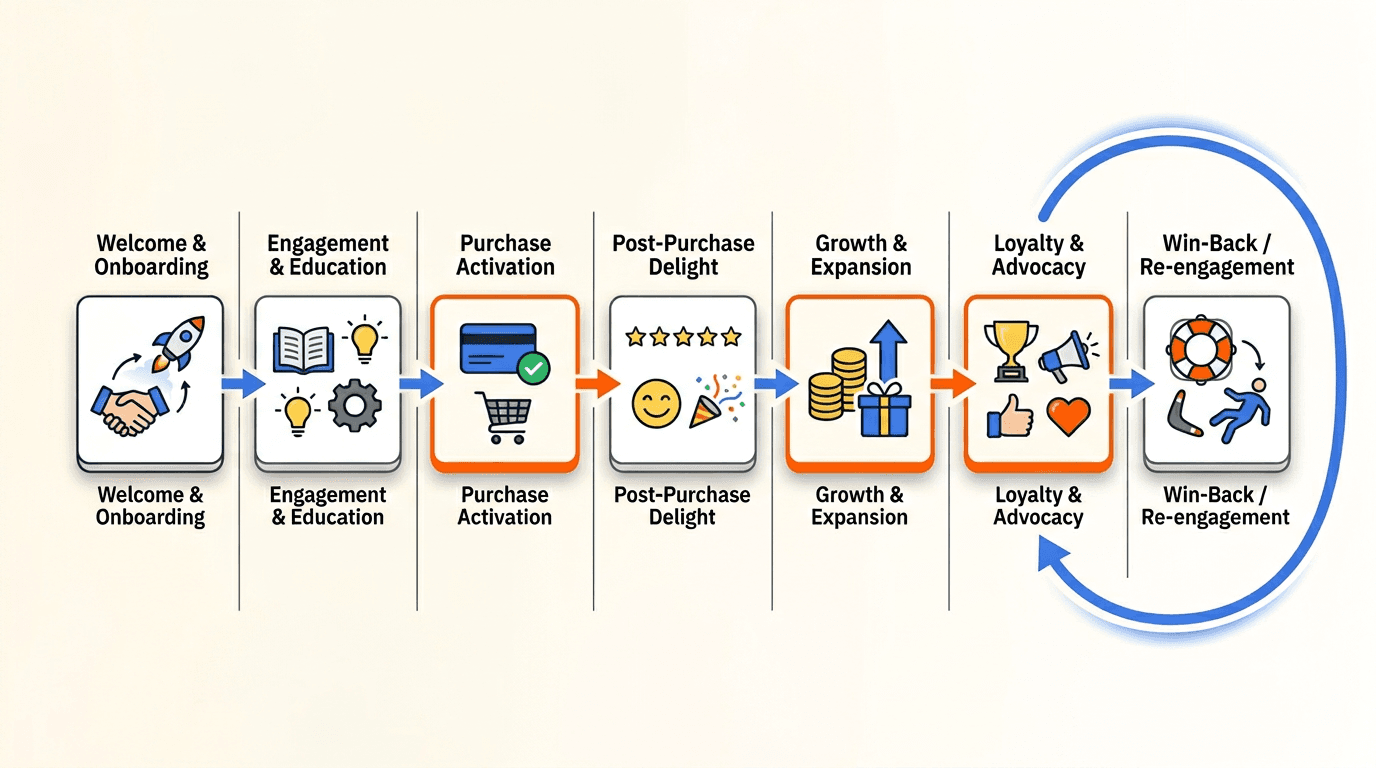
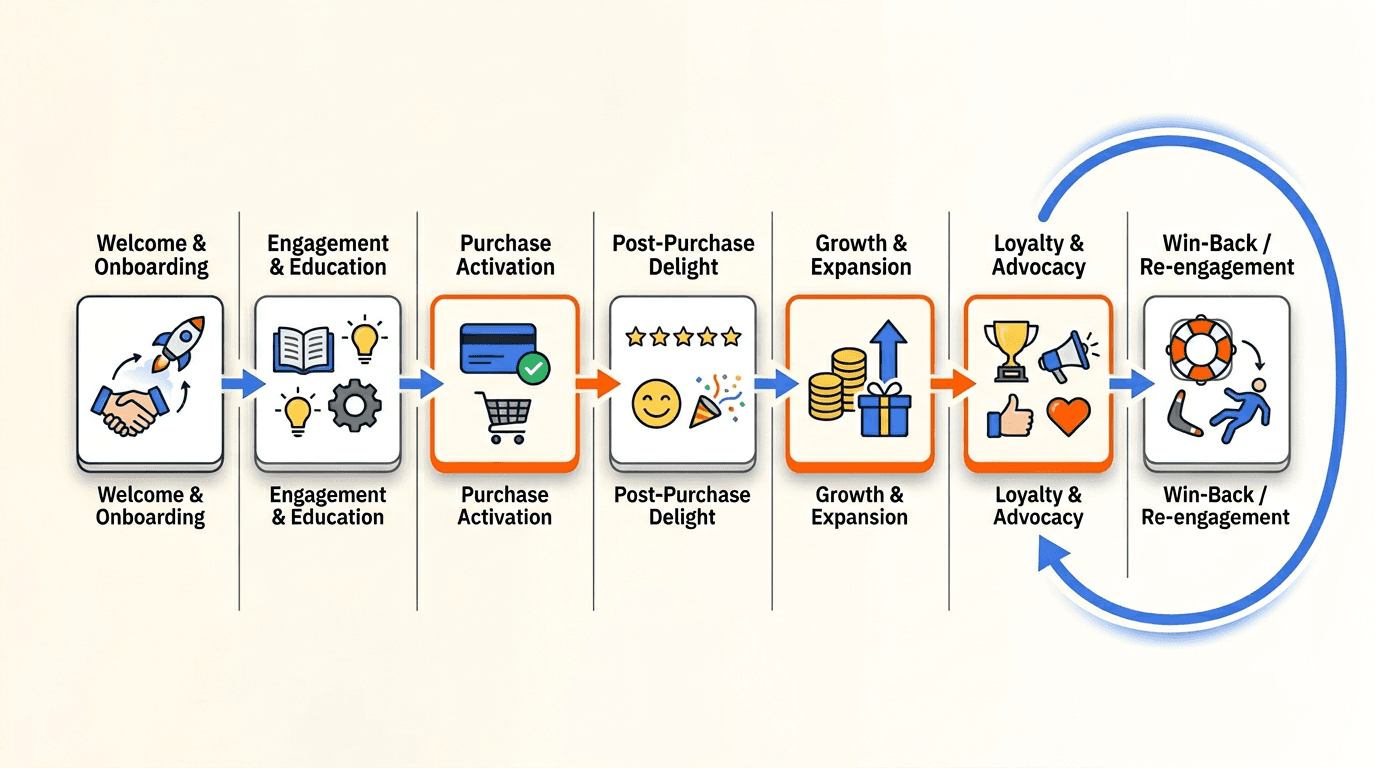
That's the point. A properly built set of flows covers every major touchpoint in the customer lifecycle, from the moment someone subscribes to the moment they become a loyal repeat buyer, without manual intervention. The seven flows below are the minimum every DTC store should have running.
The 7 Flows
1. Welcome Series
The welcome series is the first conversation you have with a subscriber. Most brands treat it as a product catalogue, here's what we sell, here's a discount, goodbye. That's not what it's for.
The welcome series should introduce the brand, explain what makes it different, tell the founder's story, and make a compelling offer for that first purchase. It's the only chance you get to establish who you are before someone decides whether to buy.
One rule that applies everywhere else on this list: every email a non-customer receives should include the welcome series offer. Not just the welcome series itself, every touchpoint. Browse abandon, cart abandon, campaigns. "What I see so many businesses do is somebody goes through that welcome series. If they don't place an order, they never see that offer again, which is crazy."
That offer should follow non-customers everywhere until they buy.
2. Browse Abandoned
Browse abandon triggers when someone visits your site, looks at products, and leaves without adding anything to cart. It's the earliest and lowest-intent touchpoint in the abandonment sequence.
Because intent is lower here, the focus should be on reinforcing the brand and the offer rather than pushing hard for a sale. Remind them what they looked at. Show the incentive. Give them a reason to come back.
The most common mistake is sending browse abandon emails that look identical to cart abandon emails. They're different conversations with different people at different points in the decision process.
3. Abandoned Cart
Someone added a product to their cart and didn't check out. Intent is higher here than browse abandon, they got far enough to pick something and add it. Something stopped them.
Abandoned cart flows should remind people what's in their cart, address common objections (returns, shipping, sizing), and reinforce the offer. Multiple emails in sequence typically outperform a single one. For brands using Klaviyo, a tool called KlaviyoKlue (Clairvaux) improves trigger logic and increases abandoned cart and browse revenue, worth looking at once your basic flows are in place.
4. Abandoned Checkout
This is the highest-intent abandonment. Someone started the checkout process, they entered their details, got to the payment page, and stopped.
Abandoned checkout emails should be direct. These people were ready to buy. Something interrupted them: distraction, uncertainty, a payment issue. A simple, clear reminder is usually enough. Urgency works here. So does reassurance around secure payment and returns.
The difference between cart and checkout abandon is intent, and your messaging should reflect that. Cart abandon is persuasion. Checkout abandon is recovery.
5. Post-Purchase Thank You
The moment after someone buys is when you start the next sale.
A post-purchase thank you flow sets expectations (what happens next, when it ships), reinforces the buying decision, and begins the upsell conversation. At a basic level, this is a flow that thanks the customer and recommends related products.
As you scale, this is also where the most meaningful personalisation happens, covered in more detail below.
6. Fulfilled Order Flow
The fulfilled order flow triggers when an order ships. At minimum: delivery confirmation and tracking information. Done well, it does more.
This is a natural moment to request a review, introduce a loyalty programme, or make a cross-sell recommendation. The customer ordered, they're waiting for delivery, they're engaged. That's a window most brands miss entirely.
7. Win-Back Flow
Win-back flows target customers who haven't purchased in a while. The definition of "a while" varies by product, a skincare brand with a 30-day repurchase cycle will define lapsed differently than a furniture brand.
A win-back sequence typically starts with a re-engagement offer, runs through a few emails, and ends by asking whether the customer still wants to receive emails. The goal is either a purchase or a clean list. Inactive subscribers who never re-engage hurt your deliverability.
How Flows Scale as You Grow
The seven flows above are the starting point. How granular you make them depends on the size of your business.
The key variable is splits: how many different pathways do you create within a single flow based on what you know about the person who triggered it?
Basic level: One path for customers, one for non-customers. This split should exist in every flow from day one. "Straight from the bat, you should build these automations in a way that talks to customers and non-customers differently."
Next level: Split by product category. If someone abandoned a cart with a skincare product, they get different emails than someone who abandoned a supplement. The post-purchase flow splits people based on which collection they ordered from and cross-sells relevant items.
Advanced level: Split by specific product. Rather than going by category, you create curated flows for your best-selling products, messaging built around the exact item, its use case, its outcomes, and what pairs well with it.
You can also extend the types of flows you run beyond the core seven:
- Cancelled order flows: triggered when an order is cancelled, aimed at recovering the sale or understanding why
- Refund flows: triggered after a refund, aimed at retaining the customer relationship despite a negative experience
- Loyalty point flows: triggered when points are earned or about to expire, aimed at driving repeat purchases
- Ticket created flows: triggered when a support request is made, aimed at managing the experience proactively
"You can get more and more and more in the weeds." The question isn't whether more granularity is better. It's whether your business is large enough to justify the extra work. Under $50k to $100k a month, the depth isn't worth the complexity.
The One Thing Worth Testing in Every Flow
Most brands optimise their flows in the wrong direction. They A/B test subject lines, tweak send timing, adjust the email design. None of those things move the needle the way one thing does.
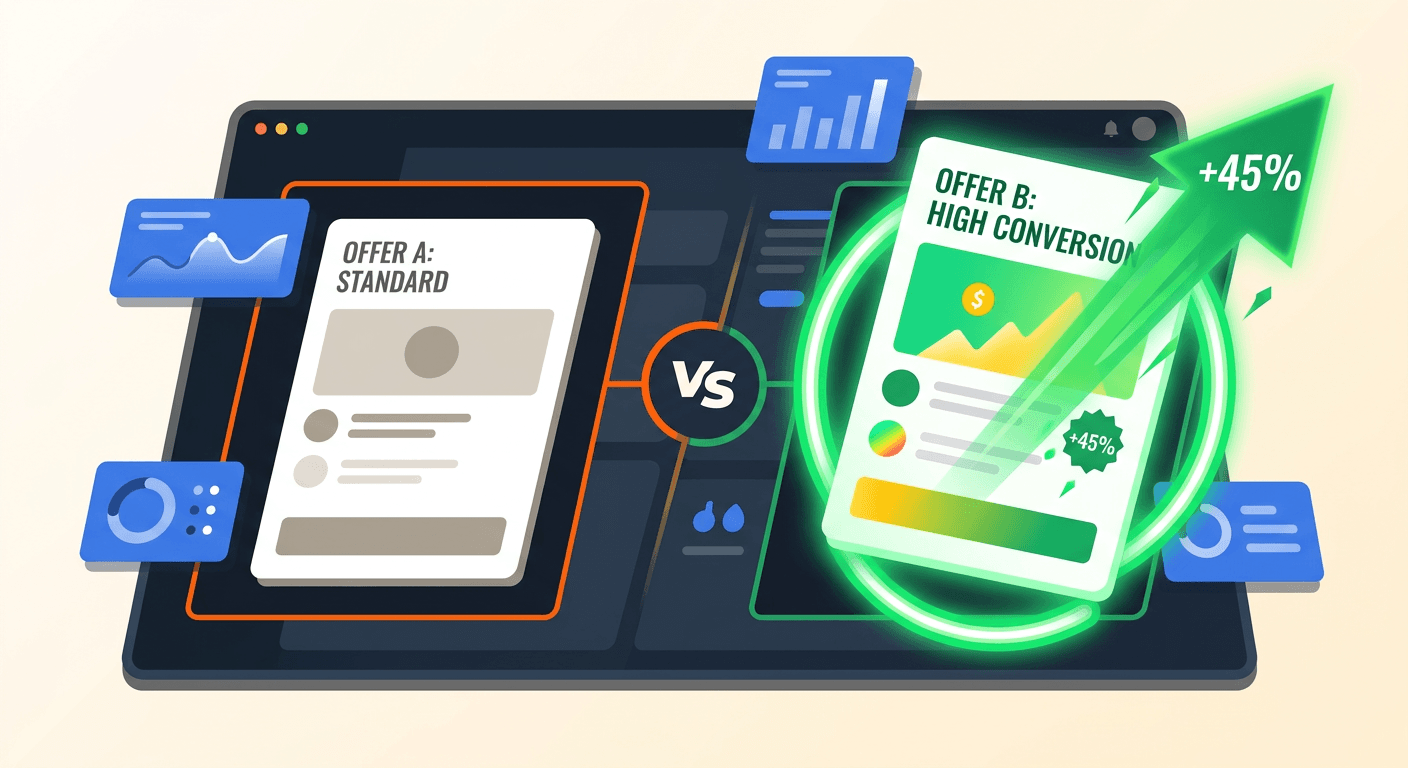
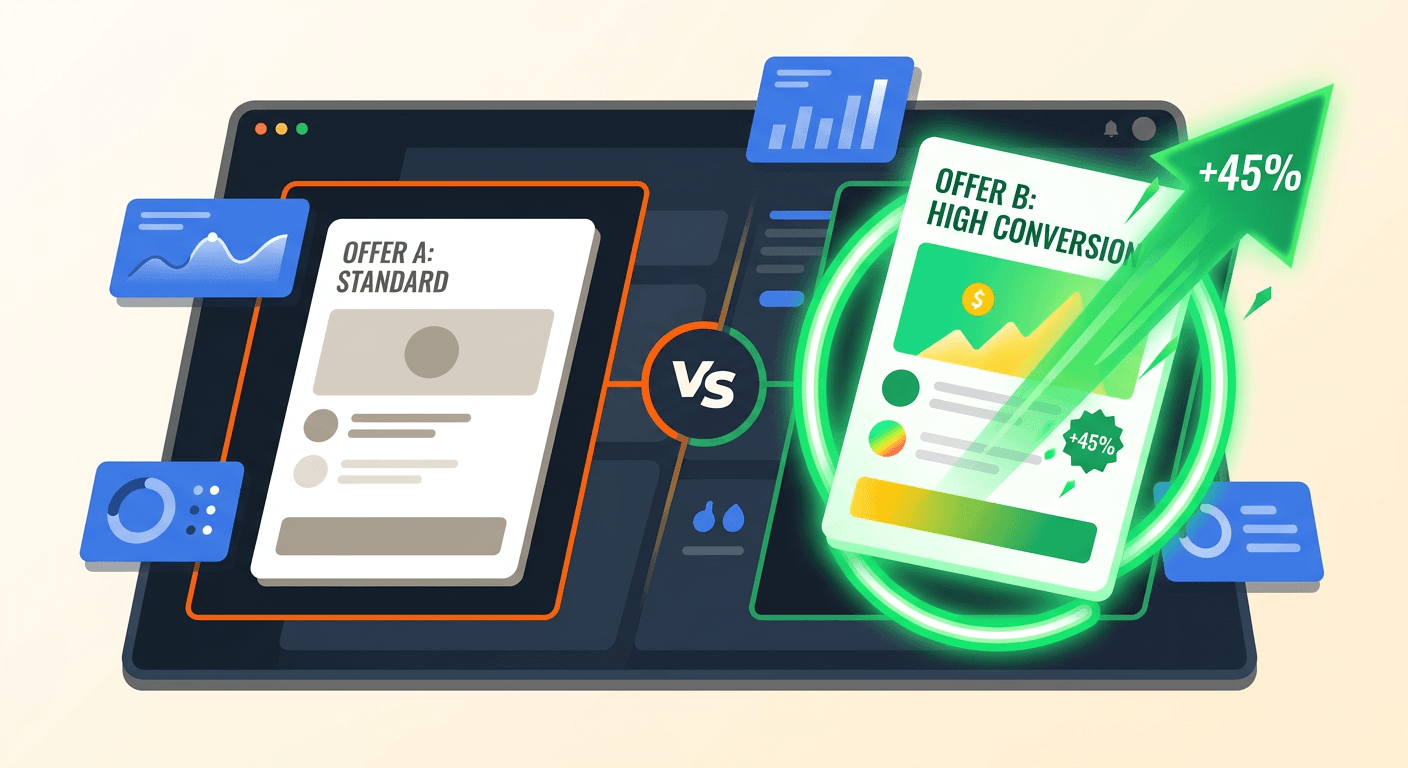
"The biggest thing you're going to want to test across all your flows isn't the copy in the emails. It's not the timing. It's not the design. It's the offers."
Test whether 10% off or 20% off converts at a higher rate. Test whether a percentage discount or a dollar-off drives higher AOV. Test whether free shipping or a discount code results in better repeat purchase rates. These are learnings you can apply everywhere in your account, across flows, campaigns, and signup forms.
Subject line testing tells you what worked for one email on one topic. Offer testing tells you what drives purchase decisions for your entire customer base.
Start with the welcome series. Find the offer that converts at the highest rate and produces the best AOV. Then apply that offer across every non-customer touchpoint in every flow.
Audit Your Flows
Here's what to check today.
Do all 7 flows exist? Welcome series, browse abandoned, abandoned cart, abandoned checkout, post-purchase thank you, fulfilled order, win-back. If any are missing, that's the first thing to build, not optimise, build.
Do your flows split customers from non-customers? If everyone in an automation gets the same emails regardless of purchase history, you're sending the wrong message to a large portion of the people who triggered it.
Does every non-customer touchpoint include the welcome series offer? Browse abandon, cart abandon, campaigns. If the incentive disappears after the welcome series ends, non-customers who didn't convert on the first pass lose the prompt they need to come back.
Are your post-purchase flows personalised by category? If every buyer gets the same post-purchase sequence regardless of what they ordered, there's a cross-sell opportunity sitting unused in every transaction.
Are you testing the offer? Not the subject line. Not the timing. The offer. Pick two variations and run them against each other in the welcome series first, then apply the winner everywhere.
The automations don't need to be perfect to work. They just need to exist, run, and be built around the right logic. Most of what's broken isn't complicated. It just hasn't been fixed yet.

Meet the Author
Paul Jebasingh EmmanuelPaul Jebasingh Emmanuel is the Founder & CEO of GoX.ai, where he is building Two Minute Reports and Illustrations AI. He is passionate about data analytics, automation, and AI, and believes in creating practical tools that make marketers smarter and more productive.