
Summarize this blog post with:
Your customer saw your Instagram ad on Monday, Googled your brand on Wednesday, opened your email on Thursday morning, chatted with your support bot that afternoon, and finally converted through a retargeting ad on Friday.
Whoa, that’s a win-win, but you have no idea that any of that happened in sequence.
That's the reality for most marketing teams today. Customers move fluidly across channels while marketing data stays frozen in silos. The technology intended to bring marketers closer to their customers has, in many cases, made the distance harder to measure.
Cross-channel marketing platforms exist to solve this. They replace the fragmented stack with a single intelligence layer: one place where every touchpoint feeds a unified customer profile, every campaign is coordinated, and every dollar spent can be traced to revenue.
This guide covers everything you need to know to find, evaluate, and implement the right platform for your team.
What Is a Cross-Channel Marketing Platform?
A cross-channel marketing platform is software that unifies customer data from every touchpoint (paid ads, email, SMS, social, web, and CRM) into one place, enabling coordinated campaigns, accurate attribution, and real-time personalization across all channels.
Instead of relying on isolated platform dashboards, marketing teams work from a single dataset that tracks how customers move through acquisition, activation, conversion, and retention across every channel they touch.
The result is a complete picture of the customer journey: not just what happened on email, or paid social, but what happened across all, in sequence, over time.
The Four Core Functions Every Cross-Channel Platform Delivers
At its core, every cross-channel marketing platform is built around four functions:
Data Aggregation: Pulls customer data from every source (ad networks, CRM, analytics, e-commerce, and more) into one place. Every team works from the same numbers, no reconciling required.
Audience Segmentation: Groups customers by behavior, demographics, purchase history, and predictive signals. Segments update automatically as behavior changes, so targeting stays relevant without manual list management.
Campaign Orchestration: Turns strategy into automated execution. A customer who browses a product page can trigger a follow-up email, a retargeting ad, and an SMS reminder in one coordinated sequence rather than three disconnected approaches.
Performance Measurement: Shows how channels worked together to drive a conversion, not just which one got the last click. This gives you the clarity to allocate budget based on actual revenue impact rather than platform-reported metrics.
Why Cross-Channel Marketing Has Become Non-Negotiable
The average customer touches a brand six or more times before converting. Each of those touchpoints is an opportunity to build trust or lose it.
The data makes the stakes clear:
- 76% of B2C brands still struggle to activate their offline data for cross-channel marketing (Blueshift)
- Brands with consistent presentation across all channels see revenue growth of up to 23% (Lucidpress / Demand Metric)
- Companies using coordinated cross-channel strategies see 13% higher ROAS compared to those running siloed campaigns (Flarelane)
The gap between knowing this and actually executing it is where most brands lose ground. Technology, team silos, and fragmented data keep the majority stuck in multi-channel habits while customer expectations continue to rise.
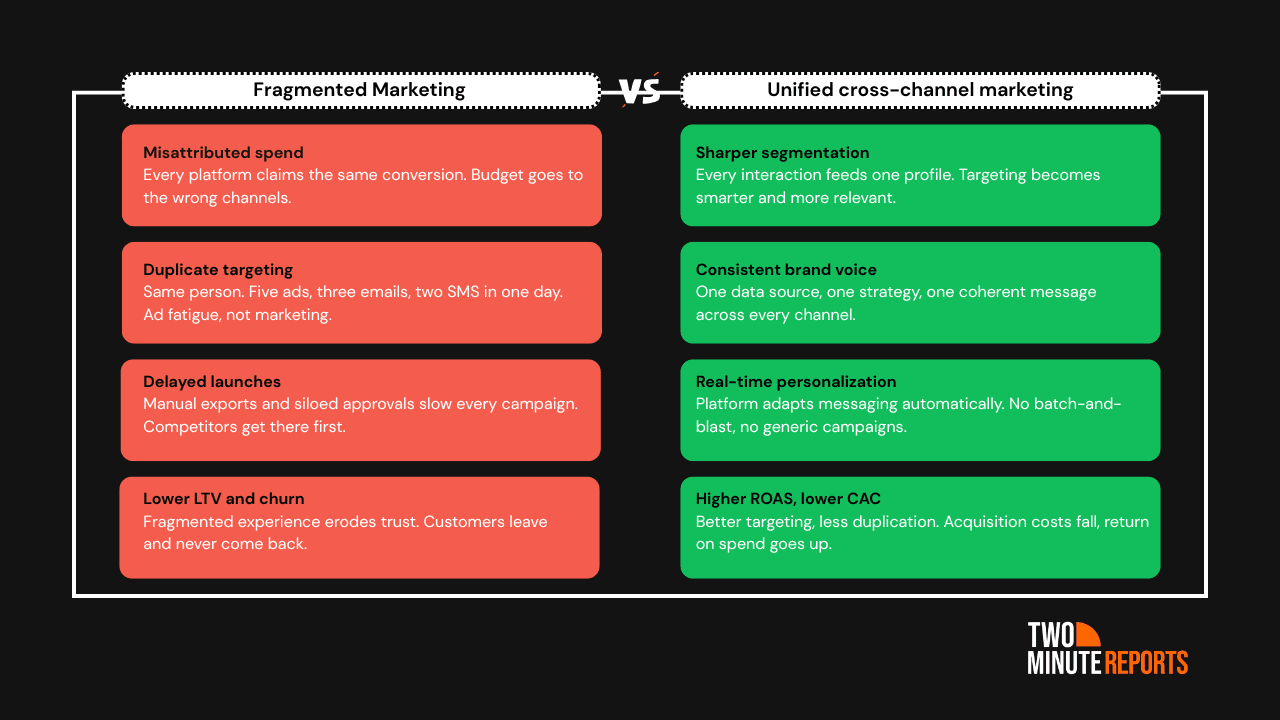
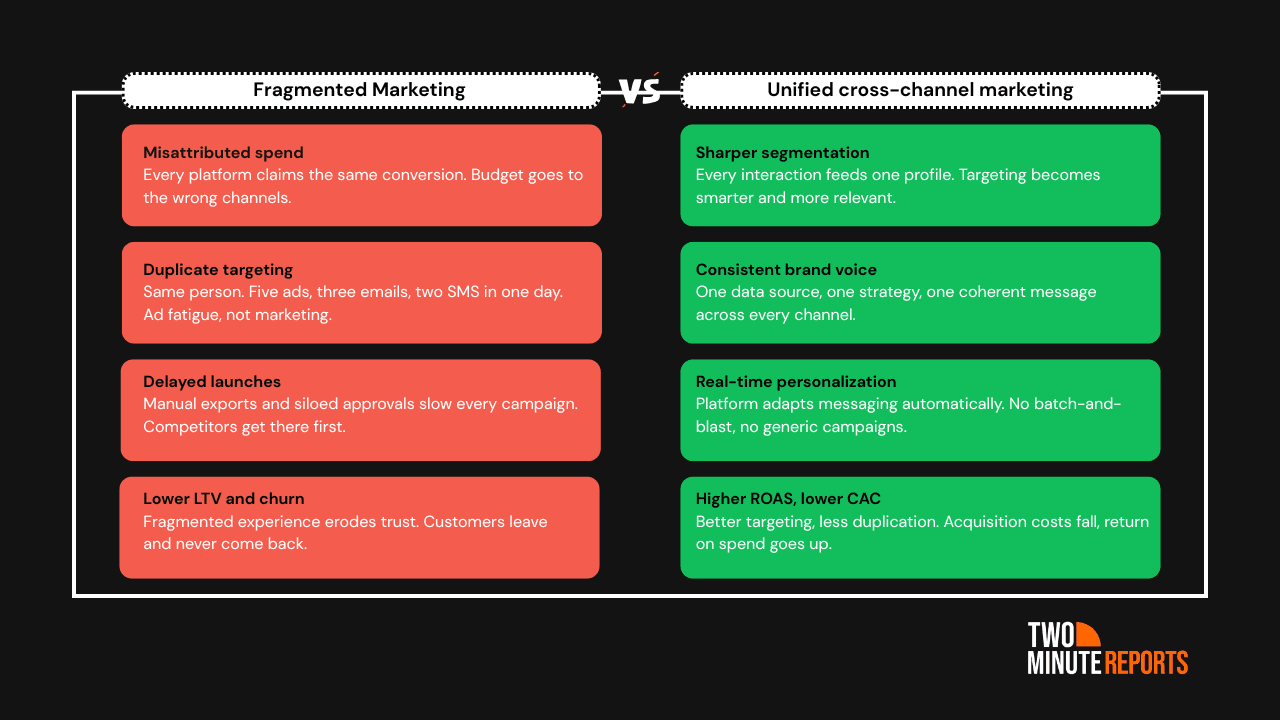 Fragmented vs Unified Marketing: Where Your Budget Actually Wins
Cross-channel marketing closes that gap. It turns a collection of isolated channels into a coordinated system where every touchpoint works toward the same outcome.
The 9 Best Cross-Channel Marketing Platforms in 2026 (Compared)
This list was compiled based on five criteria: depth of core features, native integration count, verified user reviews across G2 and Capterra, pricing transparency, and AI capabilities. It covers platforms across different use cases and budgets so you can find the right fit regardless of team size or maturity level.
1. Two Minute Reports: Best for Agency Cross-Channel Reporting
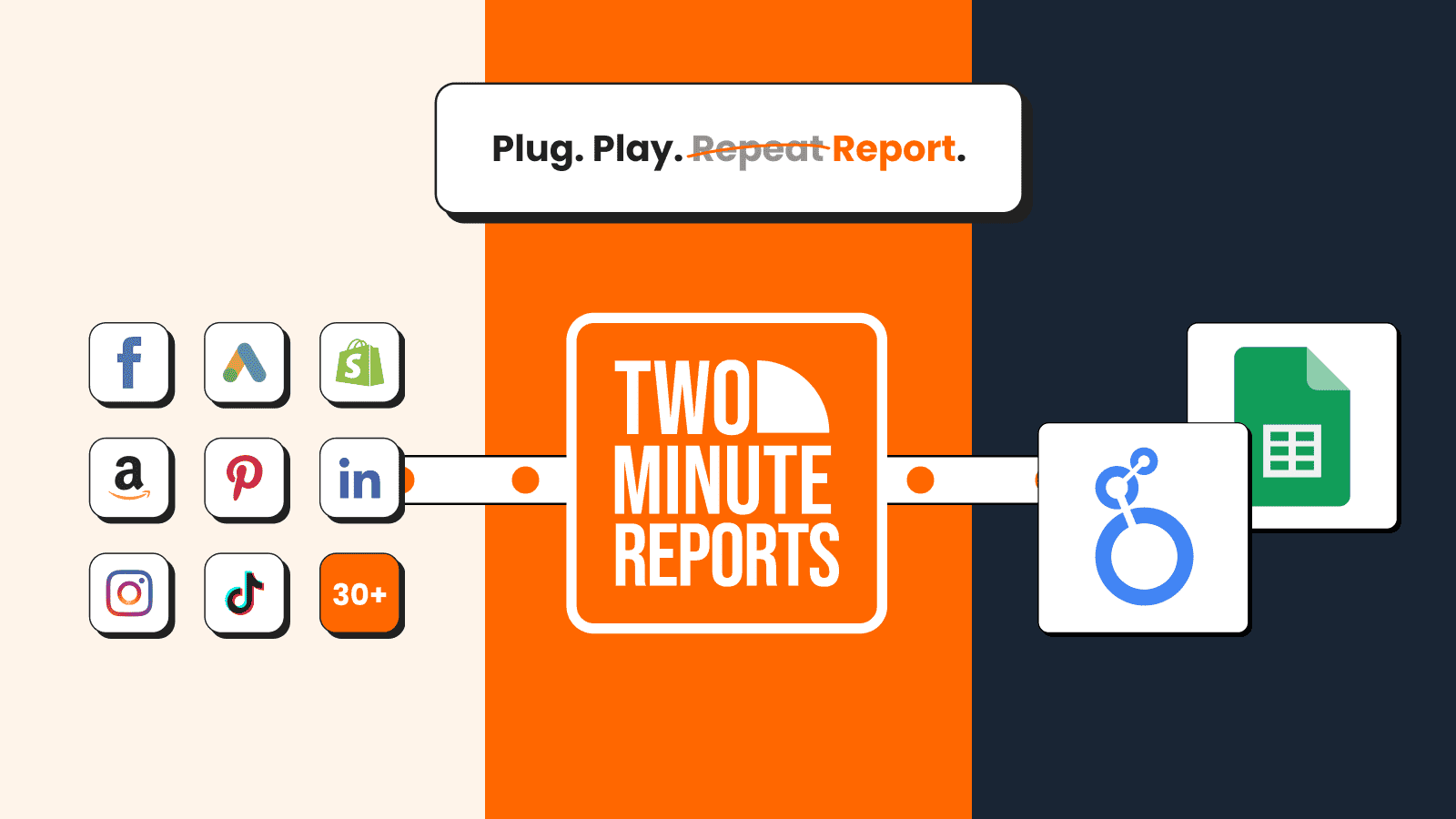
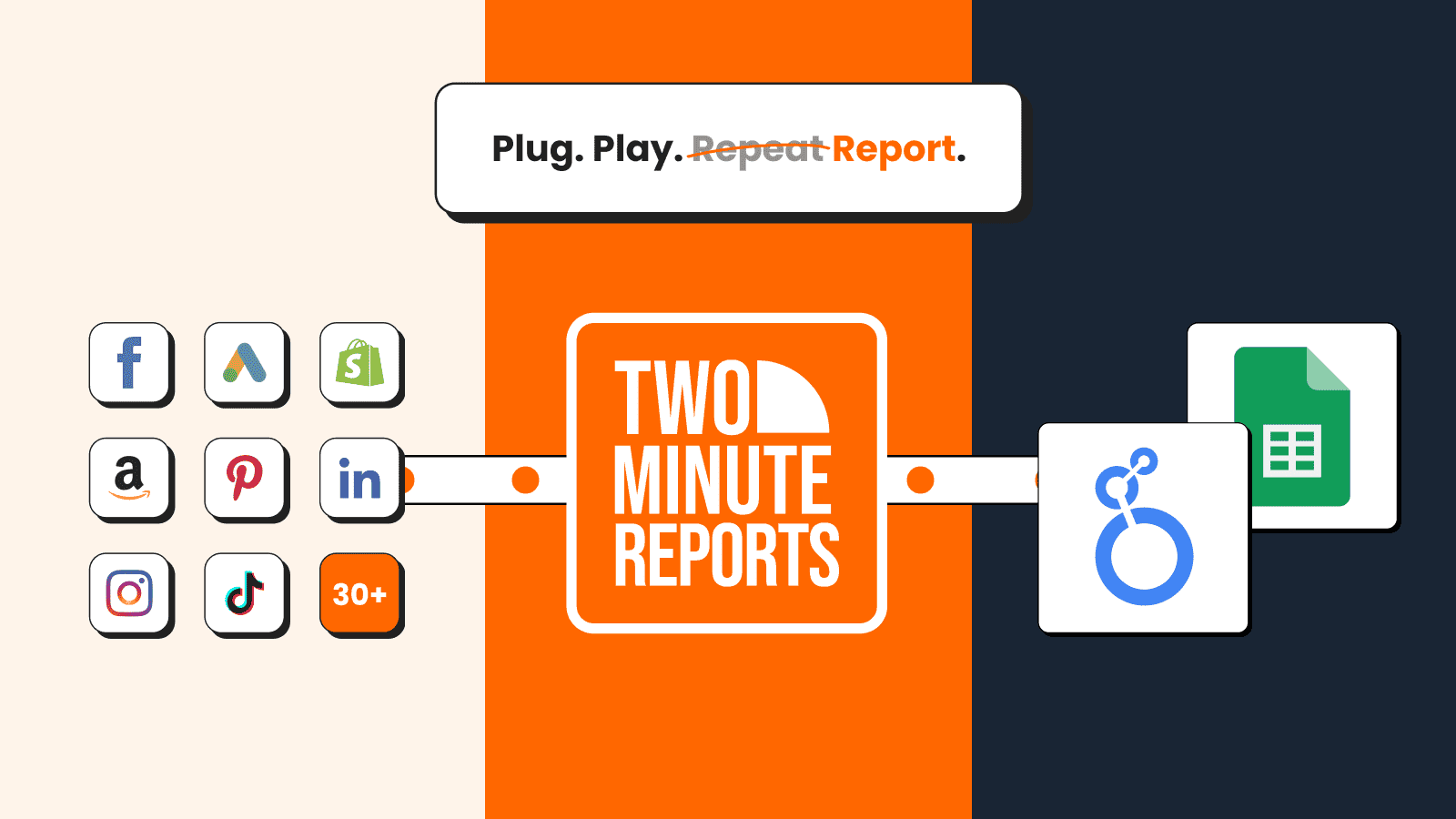
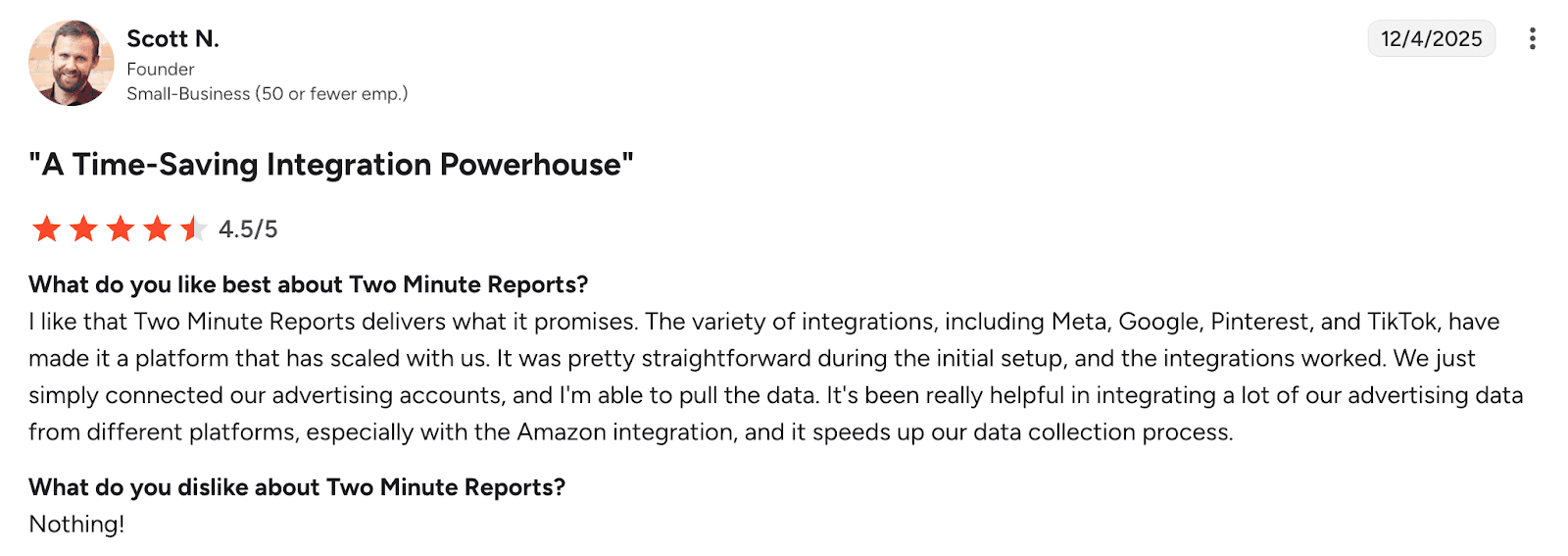
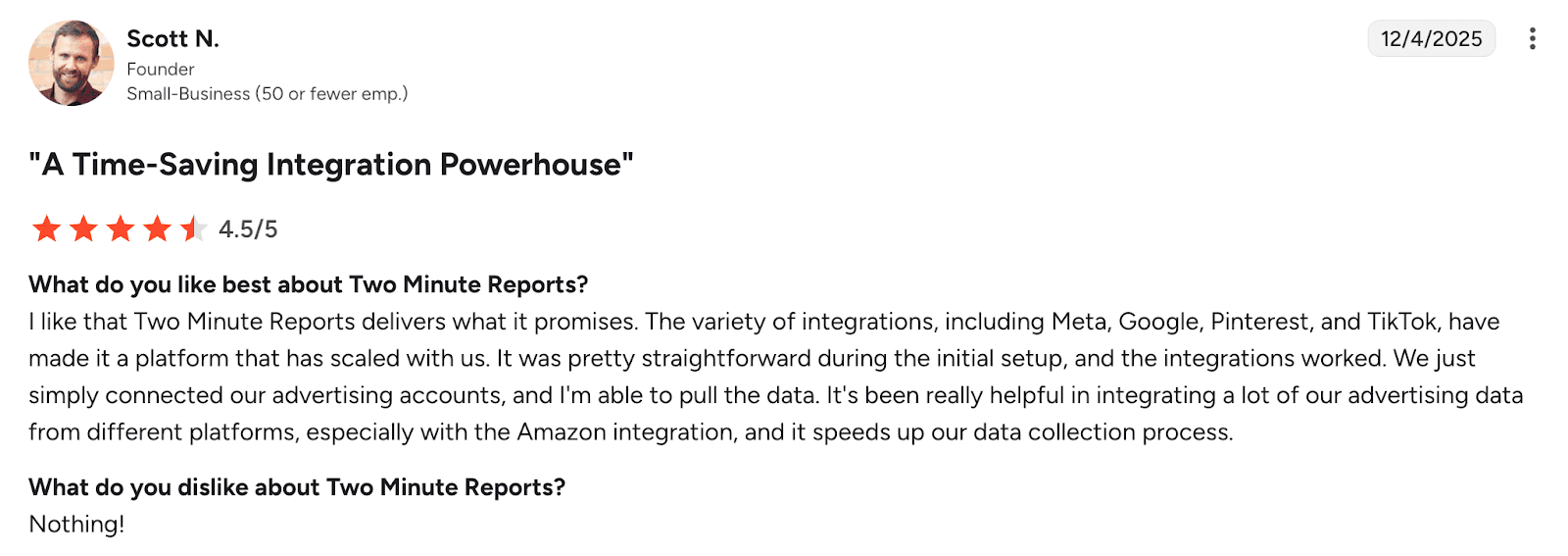
Two Minute Reports is a reporting automation tool built specifically for digital marketing agencies. It connects 30+ marketing data sources directly into Google Sheets and Google Data Studio, letting agencies automate client reports, schedule delivery, and create white-labeled dashboards without switching between platforms or exporting CSVs manually.
Key Features:
- Centralized data, zero coding: Pull data from 30+ marketing platforms covering Google Ads, Facebook Ads, TikTok, Shopify, and more into one place without dealing with APIs or scripts.
- Reporting that runs itself: Eliminate manual exports and spreadsheet upkeep. Dashboards update automatically on your schedule, so your data is always fresh.
- Dashboards built around your KPIs: Customize reports to match your goals, whether it’s tracking revenue, ROAS, LTV, product-level insights, or cohort performance.
- Share insights without the back-and-forth: Automate report delivery via email or share live dashboards with stakeholders who need real-time visibility.
- Fully branded reporting for clients: Apply your logo, colors, and formatting to create consistent, client-ready reports that reflect your brand.
- Pre-built templates to get started faster: Use ready-made templates for key ecommerce metrics like revenue trends, campaign performance, ROAS, and customer cohorts.
- Data security you can rely on: Keep sensitive data protected with encryption and controlled access, ensuring only the right people see the right information.
- Alerts that keep you proactive: Get notified instantly when queries fail and act before it impacts results.
- Manage multiple stores with ease: Switch between clients or accounts seamlessly and keep all reporting workflows organized in one place.
- No-code setup, built for marketers: Connect, configure, and launch without technical dependencies. No SQL, no scripts, just a straightforward setup.
Pros:
- Keeps reporting costs manageable while still offering the features needed to scale as your data and client requirements grow.
- Easy to implement and manage without relying on technical resources
- Bring ads, email, and store performance into one dashboard for clearer, cross-channel insights.
- Highly responsive support team with an active public product roadmap
- Trusted by agencies in 78+ countries with a 94% user satisfaction rating
 Verified G2 review
Cons:
- AI chatbot in the pipeline
- No freemium plan
2. HubSpot Marketing Hub: Best for SMB to Mid-Market All-in-One Marketing
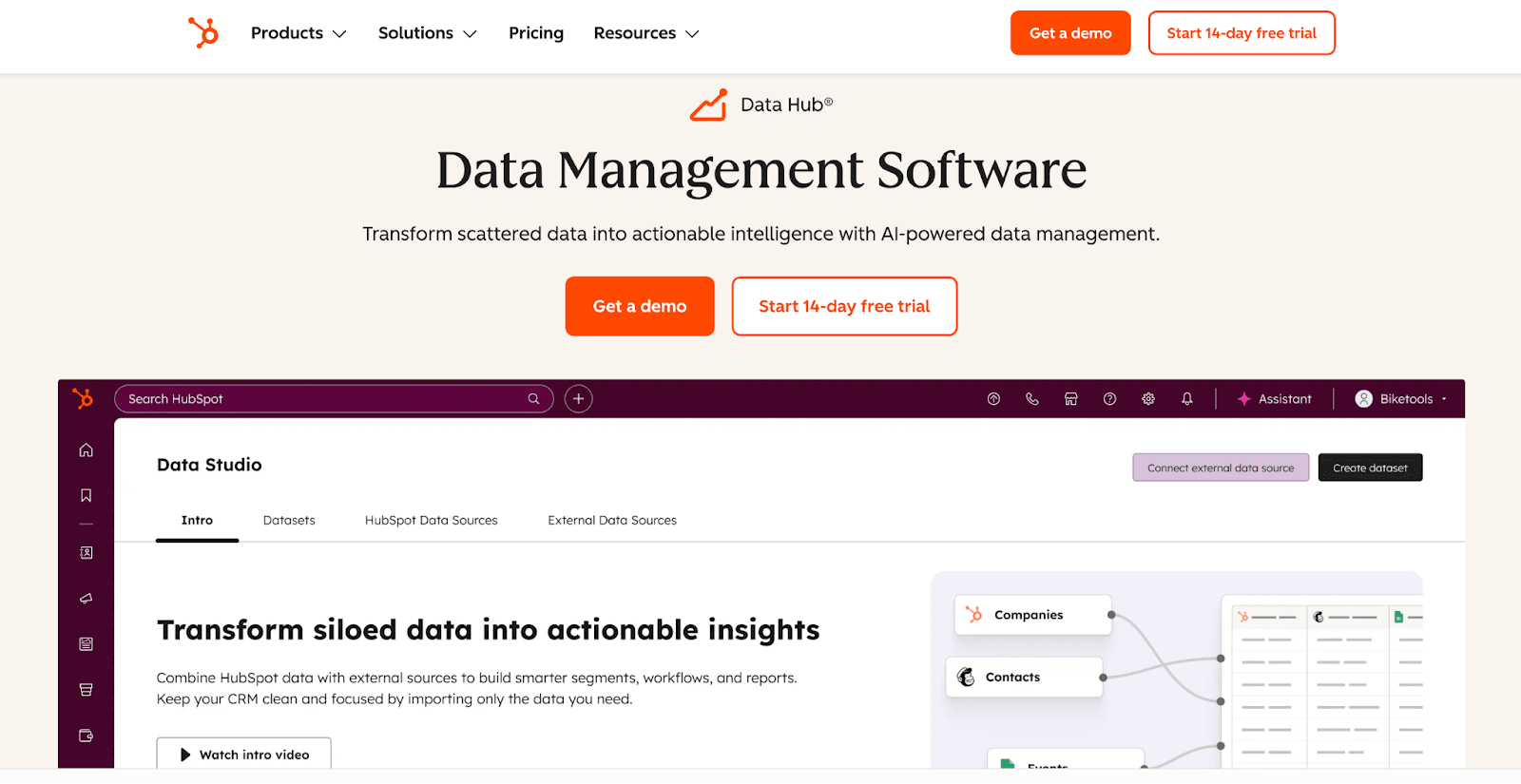
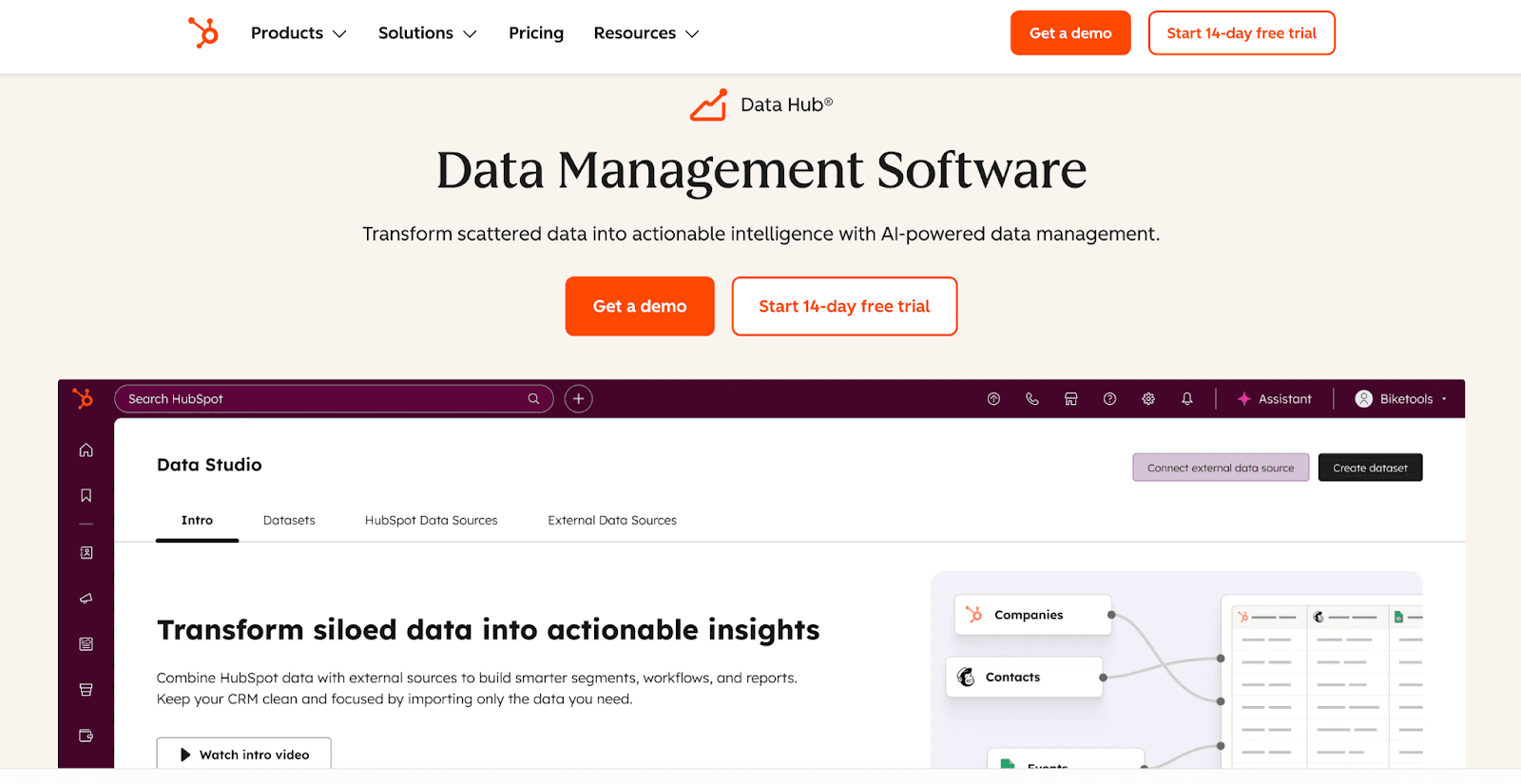
HubSpot Marketing Hub is a CRM-native platform that unifies email, automation, social media, ads, landing pages, and analytics under one roof. Because marketing data lives inside the same CRM used by sales and service teams, there is no data transfer or integration lag between departments.
Key Features:
- CRM-native architecture with full contact timeline visibility
- Email marketing, automation workflows, and lead scoring
- Social media management and paid ad tracking
- Unified reporting and revenue attribution dashboards
Pros:
- Genuinely easy to use; most teams are up and running within a week
- Free CRM tier with unlimited contacts makes it accessible at any stage
- Deep sales and marketing alignment out of the box
Cons:
- Costs escalate quickly once you need Pro or Enterprise features
- Advanced AI tools and attribution are locked behind higher tiers
3. Salesforce Marketing Cloud: Best for Enterprise Cross-Channel Journeys
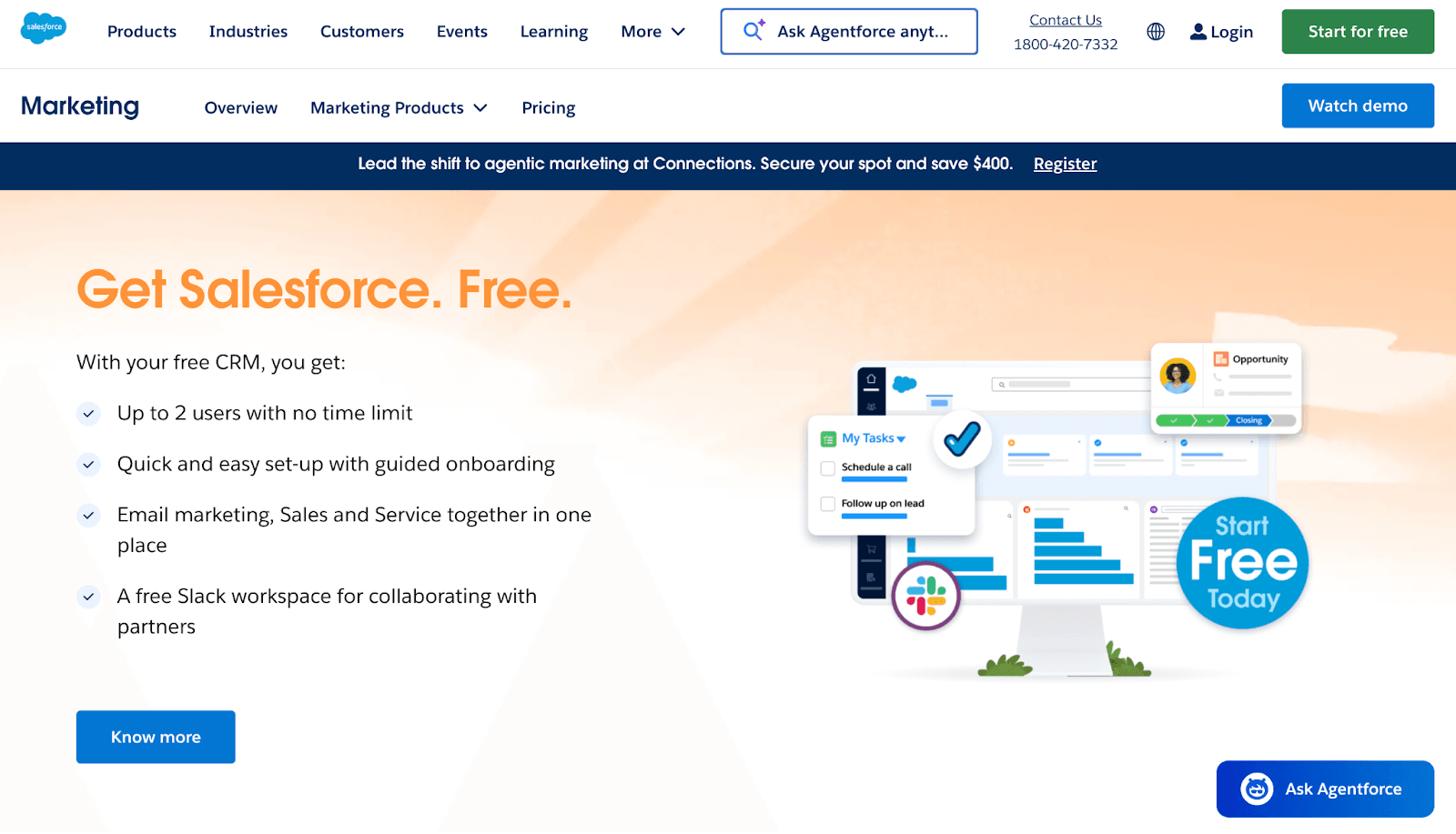
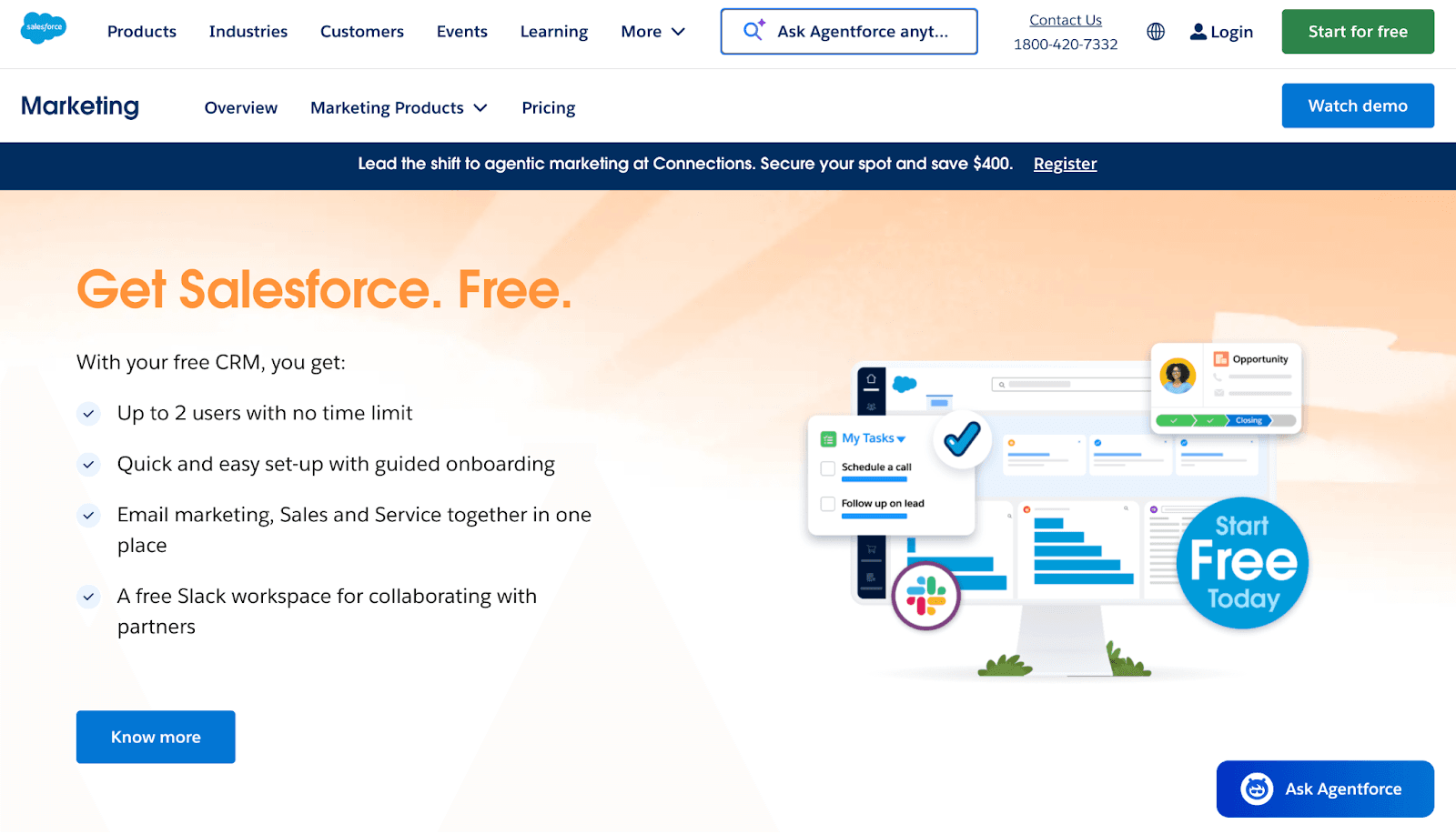
Salesforce Marketing Cloud is an enterprise-grade platform built for large organizations that need sophisticated journey orchestration across email, SMS, push, WhatsApp, and paid media. Its deepest advantage is native integration with Salesforce CRM, meaning customer data, lead scoring, and campaign attribution all live in the same ecosystem.
Key Features:
- Journey Builder for visual, multi-channel campaign automation
- Einstein AI for send-time optimization and predictive engagement scoring
- Mobile Studio for SMS, MMS, and push notifications
- Data Cloud integration for real-time audience activation
Pros:
- Unmatched depth of CRM integration within the Salesforce ecosystem
- Handles massive contact volumes and complex multi-step journeys reliably
- Strong compliance and data governance controls for regulated industries
Cons:
- Steep learning curve; most implementations require dedicated Salesforce admins
- Cost and complexity make it impractical for teams below enterprise scale
4. ActiveCampaign: Best for Automated Customer Journeys
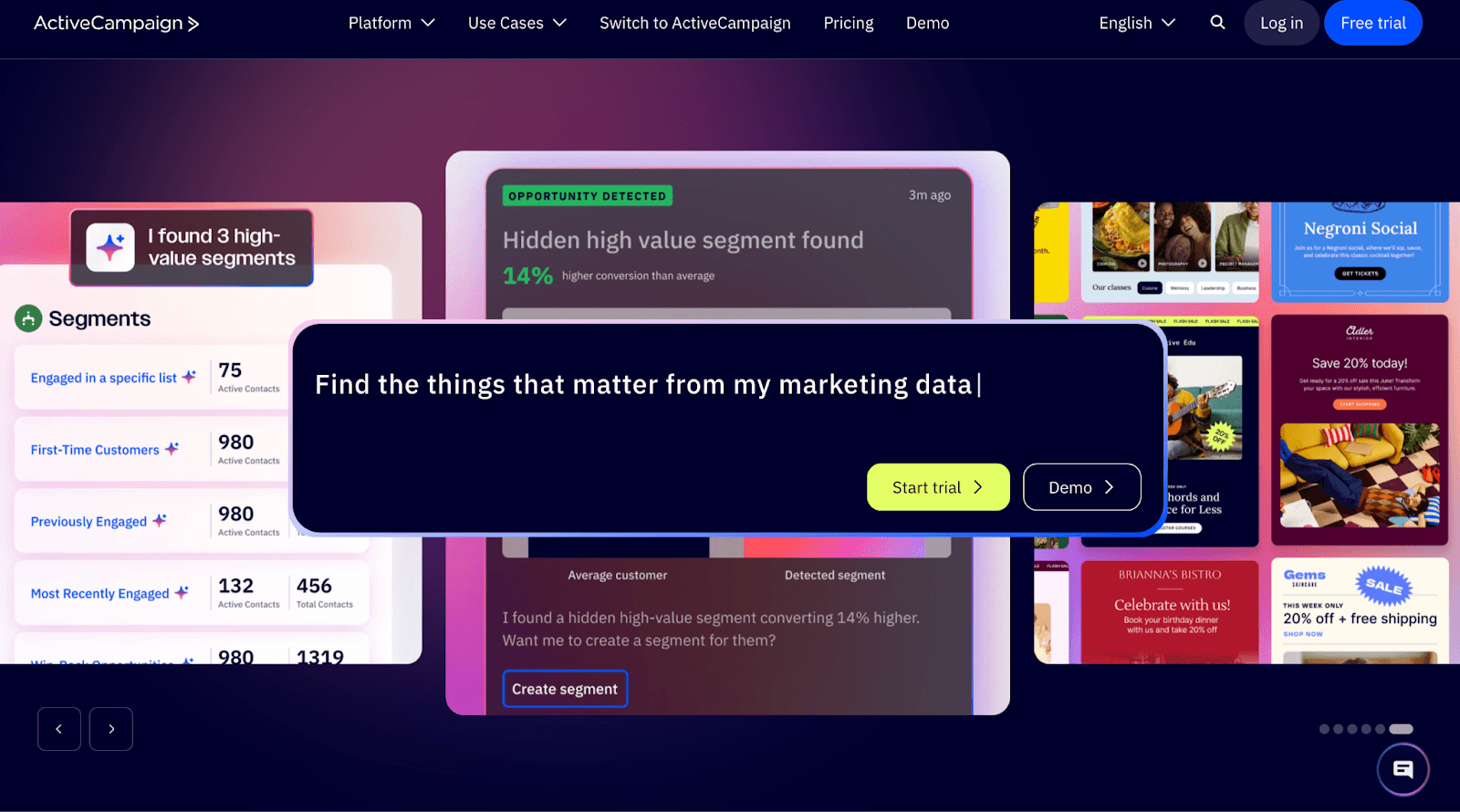
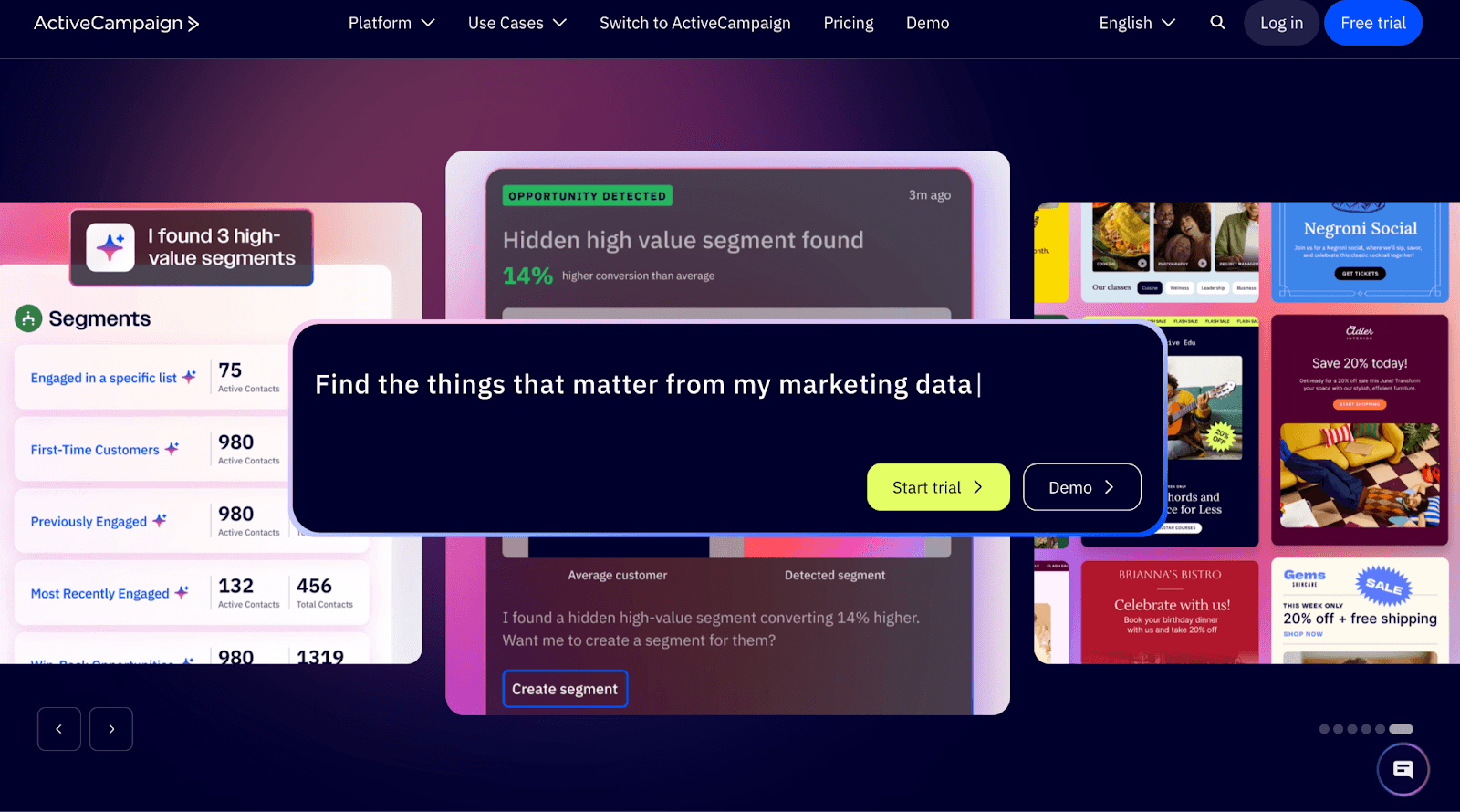
ActiveCampaign is a marketing automation platform built around the idea that every customer interaction should trigger a relevant, coordinated response. It combines email marketing, CRM, SMS, and automation in one platform, with one of the most flexible automation builders available at its price point.
Key Features:
- Visual automation builder with hundreds of pre-built recipes
- CRM with lead scoring and pipeline management
- Email, SMS, and site messaging across one workflow
- Split testing across automation sequences, not just email subject lines
Pros:
- Automation flexibility is best-in-class for the price
- Strong deliverability record across email campaigns
- 2-year price lock gives budget predictability as lists grow
Cons:
- Interface has a steep learning curve for non-technical users
- Costs rise significantly as contact lists scale
5. Brevo: Best for Cross-Channel Messaging on a Budget
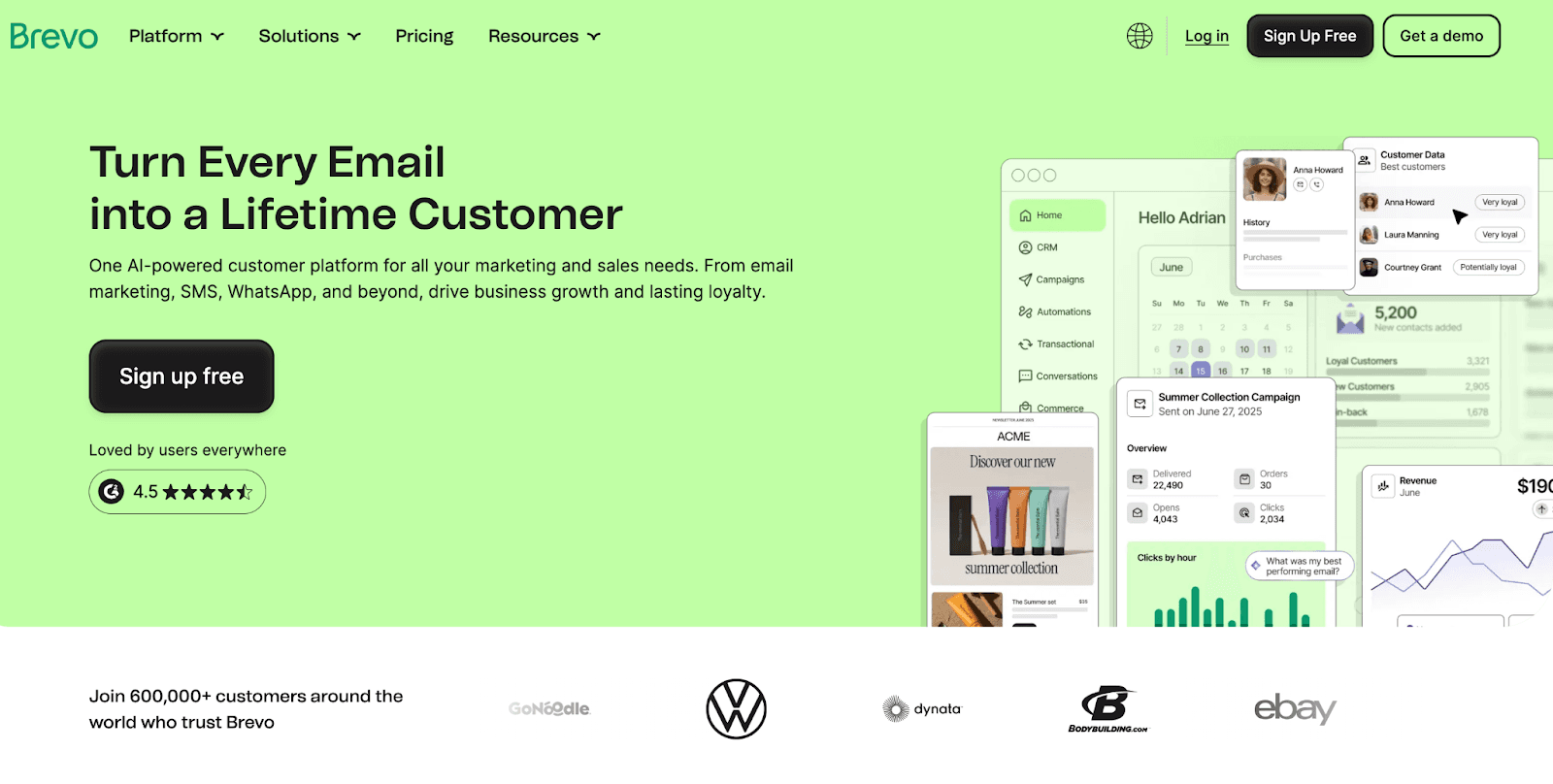
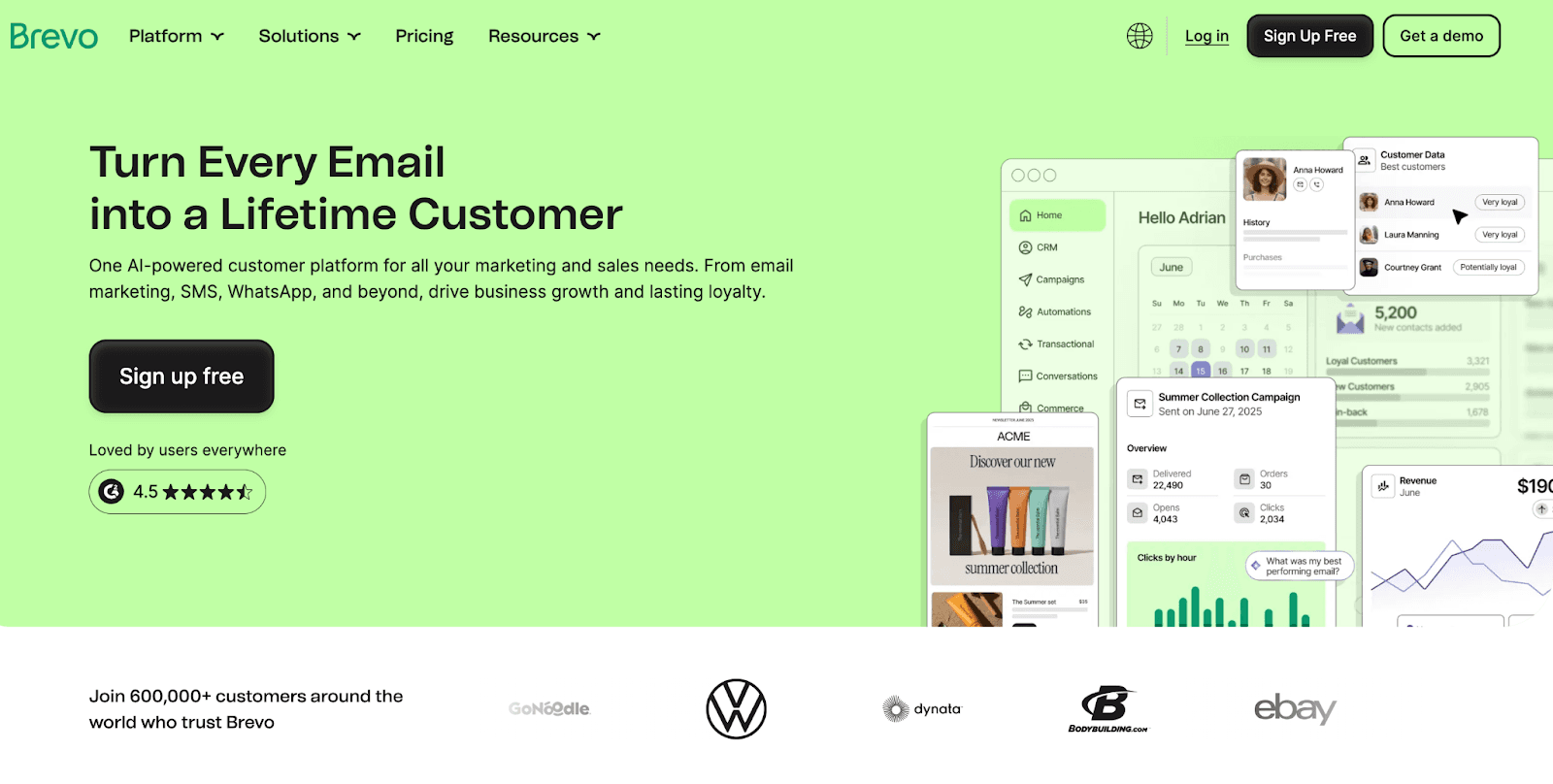
Brevo (formerly Sendinblue) has grown from an email tool into a full cross-channel messaging platform covering email, SMS, WhatsApp, and live chat. Its standout feature is a pricing model based on email volume rather than contact count, making it significantly more affordable than most competitors for brands with large lists.
Key Features:
- Email, SMS, WhatsApp, and live chat in one unified platform
- Universal inbox combining email, SMS, Facebook, and Instagram messages
- Aura AI for content generation and send-time optimization
- Built-in CRM and customer data platform for basic unification
Pros:
- Free plan includes unlimited contacts with a daily send limit
- Volume-based pricing is far more cost-effective for large lists
- Covers more channels than most tools at its price point
Cons:
- Automation depth does not match ActiveCampaign at higher tiers
- Reporting and analytics are more basic compared to enterprise platforms
6. Blueshift: Best for AI-Powered Cross-Channel Personalization
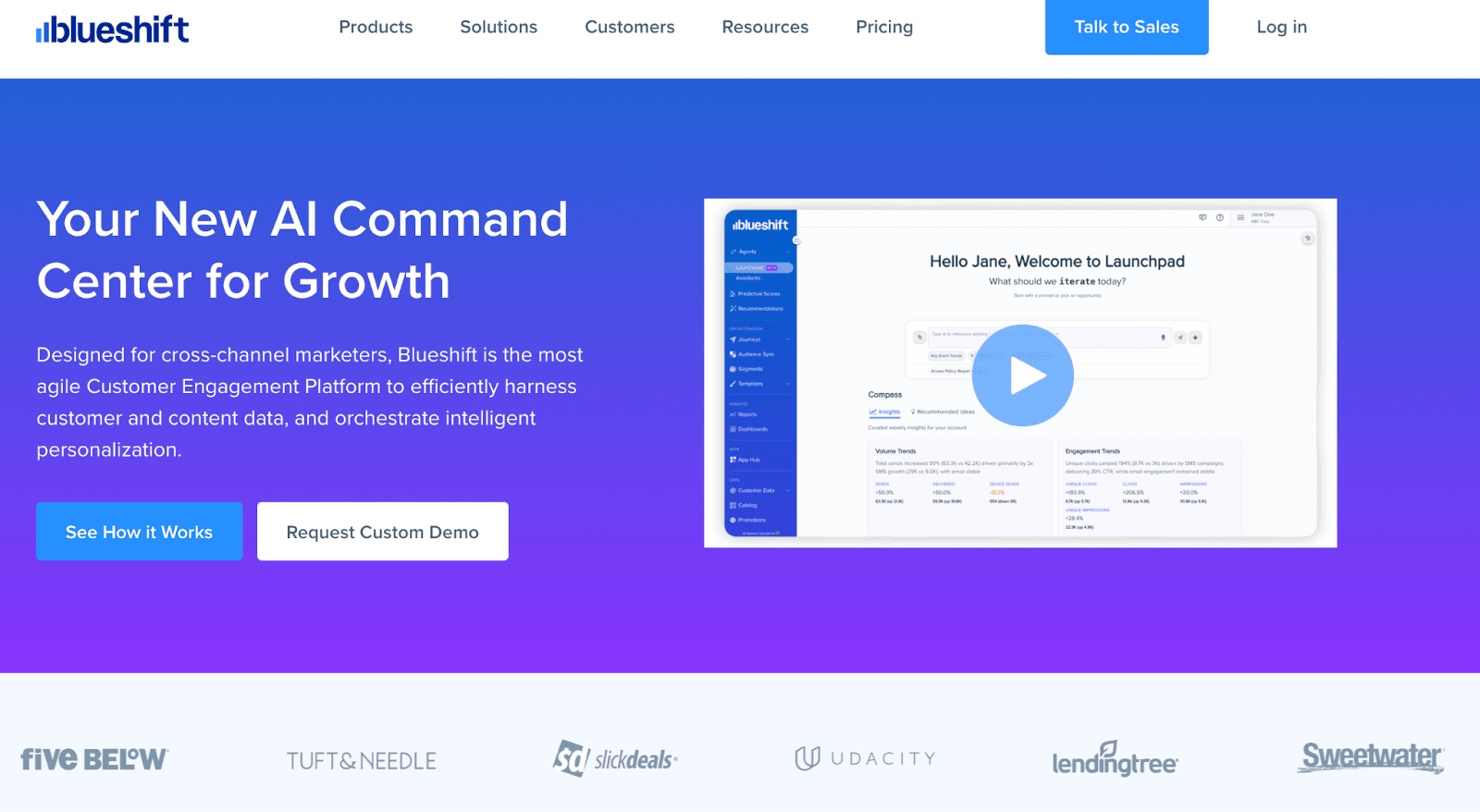
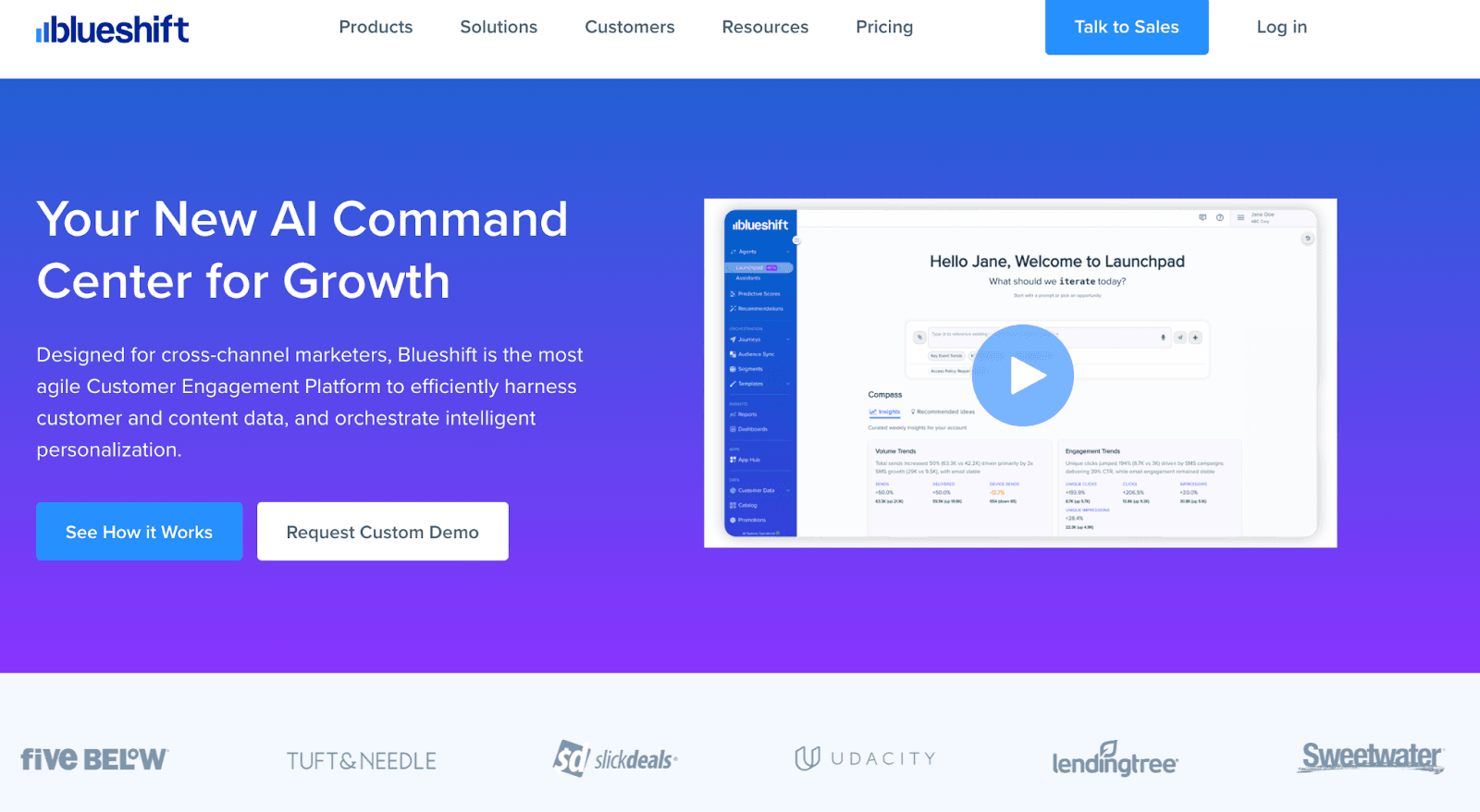
Blueshift combines a Customer Data Platform (CDP) and a cross-channel marketing platform in a single product. It is built around AI-driven, moments-based marketing: delivering the right message at the exact moment a customer's behavior signals readiness, across email, SMS, push, in-app, and paid media.
Key Features:
- Built-in CDP for real-time unified customer profiles
- AI Predictors for churn risk, LTV, and next-best-action modeling
- Cross-channel journey orchestration across email, SMS, push, and paid media
- Predictive audience segmentation updated in real time
Pros:
- CDP and marketing automation in one product reduces integration complexity
- AI layer is deeply embedded, not bolted on as an add-on
- Strong performance for high-volume, behavior-triggered campaigns
Cons:
- Custom pricing puts it out of reach for smaller teams
- Implementation requires time and technical resources to unlock full value
7. Klaviyo: Best for E-Commerce Revenue Marketing
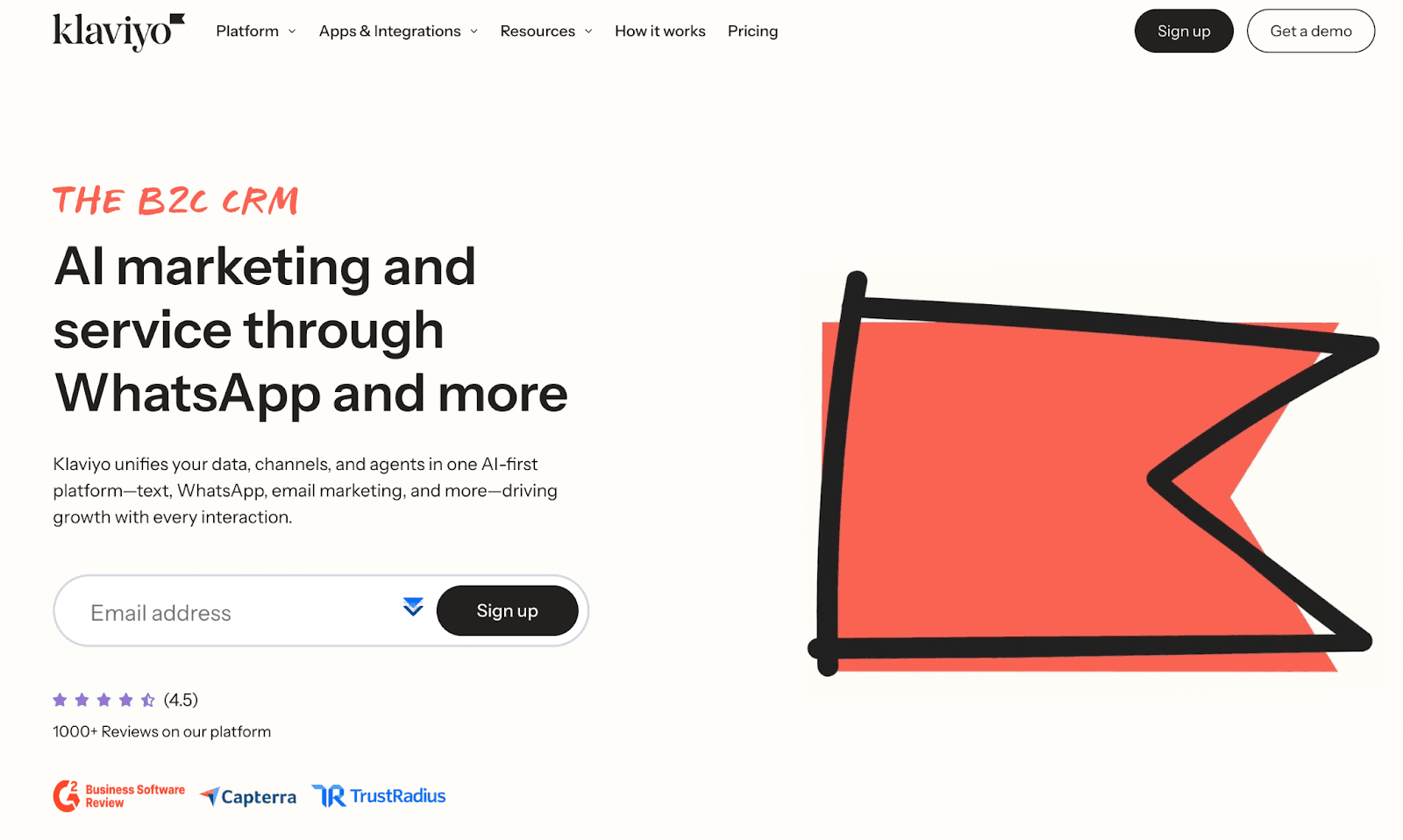
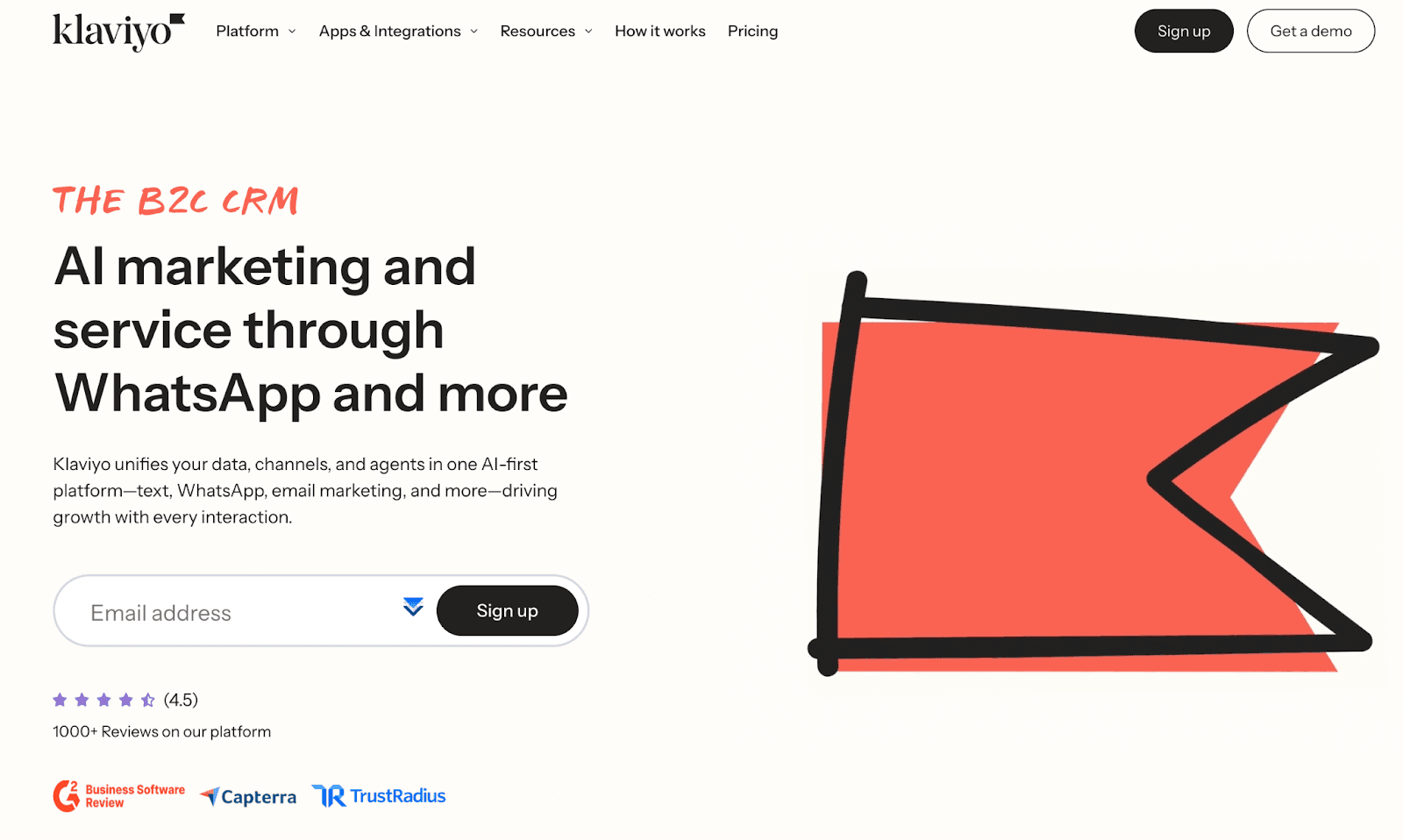
Klaviyo is purpose-built for e-commerce brands. It connects deeply with Shopify, WooCommerce, and other e-commerce platforms to pull purchase history, browse behavior, and product data into customer profiles that power highly targeted email and SMS campaigns.
Key Features:
- Deep Shopify and WooCommerce native integration
- Predictive analytics for LTV, churn risk, and next purchase date
- Revenue-attributed reporting tied directly to campaign performance
- Product recommendation flows based on purchase and browse history
Pros:
- Best-in-class e-commerce data integration and revenue attribution
- Predictive analytics are built in, not available only on premium tiers
- Large library of pre-built flows for abandonment, winback, and post-purchase
Cons:
- February 2025 pricing shift to active profile-based billing has raised costs for brands with large or less-engaged lists
- Less suited for non-e-commerce use cases
8. Iterable: Best for Flexible Cross-Channel Journey Orchestration
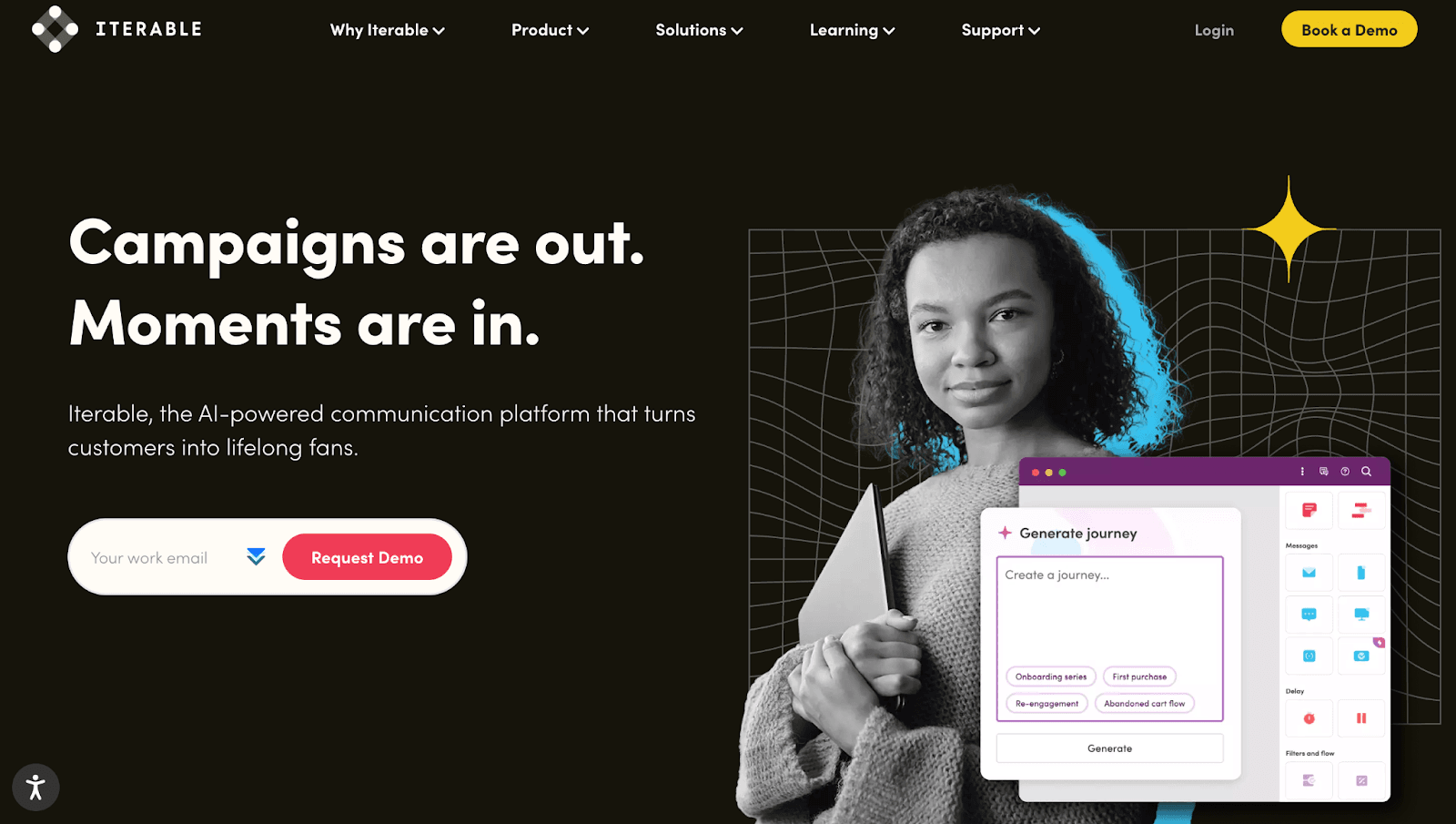
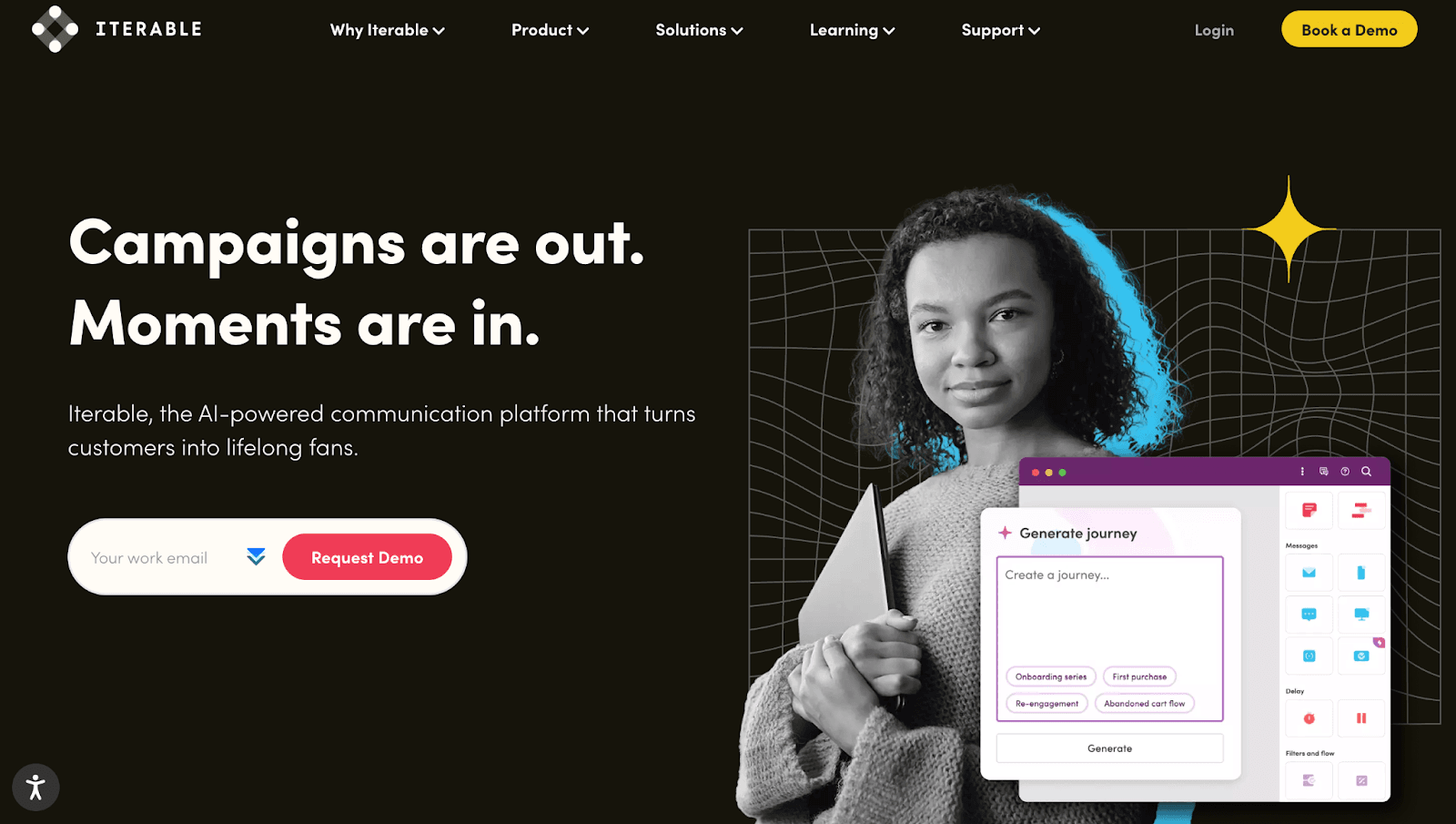
Iterable is an AI-powered customer communication platform built for growth-stage and enterprise companies that need flexible, cross-channel journey building without the rigidity of legacy platforms. It supports email, SMS, push, in-app, WhatsApp, and embedded messaging from a single orchestration layer.
Key Features:
- Cross-channel journey builder covering email, SMS, push, in-app, and WhatsApp
- Iterable AI Suite for predictive goals, generative content, and send-time optimization
- Smart Ingest for pulling data directly from cloud warehouses without engineering support
- Catalog for dynamic, individualized content recommendations at scale
Pros:
- Intuitive journey builder that handles complex, multi-step flows well
- Strong segmentation and personalization capabilities
- Responsive customer support, particularly during onboarding
Cons:
- Reporting features receive consistent feedback for needing improvement
- Custom pricing and implementation complexity make it a bigger commitment
9. Attentive: Best for SMS-First Marketing
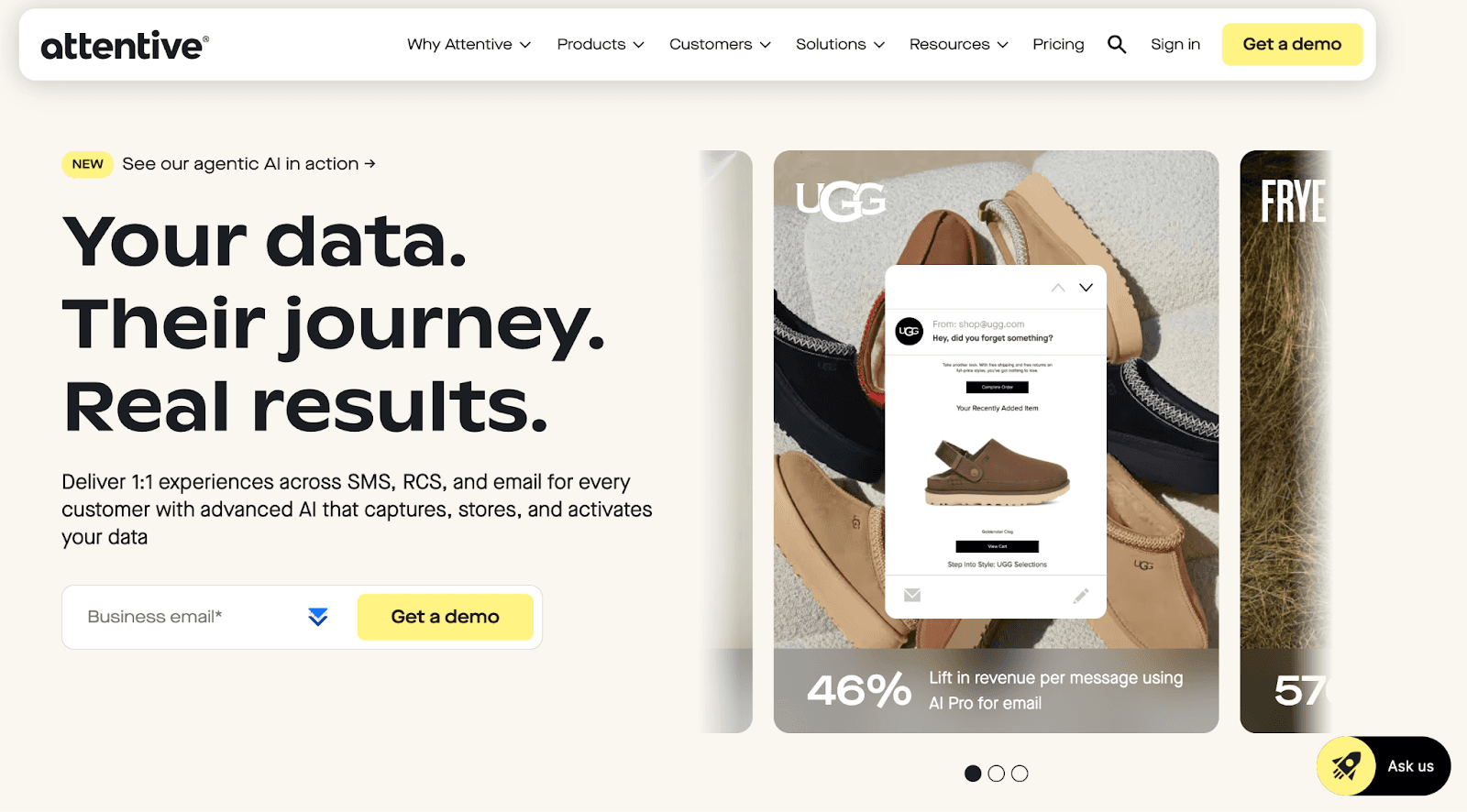
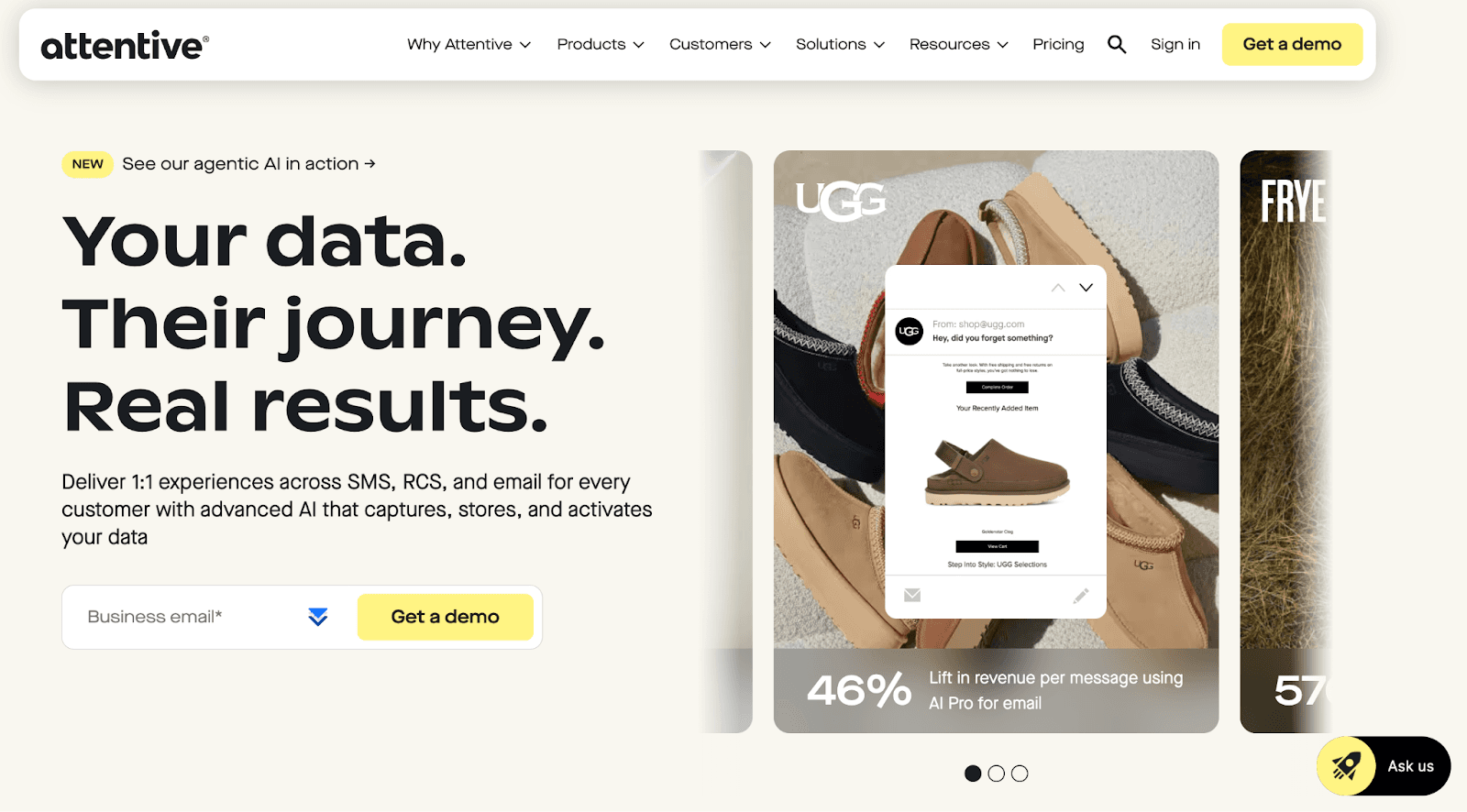
Attentive is a specialized SMS marketing platform built for brands that want to make text message marketing a primary revenue channel, not an afterthought. It combines AI-powered personalization with one of the most robust SMS compliance and subscriber growth toolkits available.
Key Features:
- AI-driven SMS personalization and send-time optimization
- Two-tap mobile sign-up tools for rapid subscriber list growth
- Conversational SMS flows with two-way messaging
- Deep integration with e-commerce platforms and ESPs for coordinated campaigns
Pros:
- Best-in-class SMS subscriber growth and compliance tools
- AI personalization delivers strong results for high-volume SMS programs
- Highly rated customer support
Cons:
- SMS-primary focus means limited capability as a standalone cross-channel platform
- Custom pricing makes cost assessment difficult without a sales conversation
Why Most Cross-Channel Platform Implementations Fail (and How to Avoid It)
Buying the right platform is only half the battle. How you implement it determines whether it delivers on its promise or becomes an expensive shelf product. These five practices separate successful rollouts from stalled ones.
1) Build a Clean Data Foundation First
The most common implementation mistake is migrating messy data into a new platform and expecting the platform to clean it up. It will not.
Before you move anything across, do the groundwork:
- Audit every existing data source and flag inconsistencies, duplicates, and gaps
- Standardize naming conventions across the board (UTM parameters, event names, audience labels, campaign taxonomy)
- Resolve identity issues at the data layer before onboarding, not after
If two customers with the same email address exist in your CRM as separate records, no platform will fix that for you automatically. Clean data in means clean data out.
2) Start With One High-Impact Use Case
Trying to orchestrate every channel and every journey on day one is a reliable way to overwhelm your team and delay results.
Pick one use case with a clear revenue impact and build that first. A strong starting point is an abandoned cart or browse abandonment journey running across email, SMS, and paid retargeting in a coordinated sequence. It is measurable, high-intent, and directly tied to revenue.
Once that journey is live, optimized, and proving its value, expand from there.
3) Align Teams Around Shared KPIs
Cross-channel strategy breaks down the moment each channel team starts optimizing for its own metrics. Email chases open rates. Paid chases ROAS. SEO chases rankings. Nobody is chasing revenue.
Before launch, establish shared KPIs that reflect actual business outcomes:
- Pipeline generated
- Revenue attributed across the full journey
- Customer acquisition cost across all channels combined
- Customer lifetime value by acquisition source
Channel-specific metrics (opens, clicks, impressions) are useful diagnostics. They should never be the goal.
4) Iterate With A/B Testing at Every Stage
Implementation is not a one-time event. Every journey you build is a hypothesis until the data proves otherwise.
Build testing into the process from day one:
- Test messaging variations across channels
- Test send timing and channel sequencing
- Test offer logic (discount vs. no discount, urgency vs. social proof)
- Test the number of touchpoints in a journey before a customer converts or disengages
Let the data determine what wins. Assumptions about what customers respond to are almost always wrong in at least one important way.
5) Invest in Ongoing Data Governance
A cross-channel platform is a living system. Without ongoing maintenance, data quality degrades quietly until reports stop making sense and campaigns stop performing.
Put the right structure in place from the start:
- Assign a dedicated data steward or marketing ops owner responsible for platform health
- Set up automated alerts for common data quality issues (missing UTMs, broken tracking pixels, integration failures, unexpected drops in data volume)
- Review and update attribution logic at least quarterly, especially as your channel mix evolves or new platforms are added
The teams that get the most out of cross-channel platforms are the ones that treat data governance as an ongoing discipline, not a launch checklist item.
Choosing the Right Cross-Channel Marketing Platform Is a Growth Decision
Fragmented marketing creates fragmented customer experiences, and fragmented experiences lose revenue. Every disconnected dashboard, every duplicate message, and every misattributed conversion points to the same root problem: channels that were never built to work together.
Solving it starts with three steps. Know your maturity level. Map your channel stack. Match your platform to where you actually are today, not where you hope to be.
The brands that will hold the strongest competitive position over the next three years are the ones that own their customer data, activate it across every channel in a coordinated way, and use AI to do it faster than any manual process could. Cross-channel strategy is no longer a martech conversation. It is a revenue conversation.
The infrastructure to win it is available now.
Frequently Asked Questions
Multi-channel marketing means being present on multiple channels independently. Cross-channel marketing means those channels share data and inform each other so a customer's email behavior triggers a relevant paid ad, for example.
Not necessarily. Many cross-channel platforms include basic customer data unification. However, if your data volume is large or you need to unify complex offline + online data, a dedicated CDP (like Segment, Tealium, or mParticle) alongside your marketing platform will give you more power.
Most platforms cover email, SMS, push notifications, in-app messaging, paid media (via audience sync), web personalization, and social media. The best platforms also support WhatsApp, direct mail, and offline data integration.
A CDP (Customer Data Platform) is primarily a data unification layer that collects, cleans, and stores customer profiles. A cross-channel marketing platform is the activation layer that uses data to run campaigns. Many modern platforms combine both, but they serve different core functions.
Related Blogs





Meet the Author
Shabika VenkidachalamShabika, at her core, is a storyteller who believes even data-heavy topics can be infused with heart. At Two Minute Reports, she blends creative writing with user intent to create clear, purposeful content that is deeply human. Away from her desk, she finds inspiration in nature, where creativity flourishes without distractions.