Summarize this blog post with:
Paid advertising isn’t getting harder because ads stopped working. It is getting harder because platform choices now determine outcomes. With global ad spending projected to reach US$1.25 trillion in 2026, choosing the wrong PPC platform quietly costs more than ever before.
At the same time, paid ads are increasingly driven by automation and AI. Platforms now control bidding, targeting, and delivery, and keeping up with dynamic changes costs more time and complexity.
This shift leaves many teams guessing. Budgets are spread across multiple channels, results vary widely, and it's unclear which platforms are actually contributing to growth.
The solution isn’t using every available channel. It’s understanding how different PPC platforms work, what they’re designed to achieve, and where they fit in your conversion funnel.
In this guide, we break down the top 11 PPC platforms that help you grow your online business, along with an actionable framework to optimize ROI using a PPC reporting software such as Two Minute Reports.
Let’s get started.
What is a PPC Platform?
A PPC platform allows businesses to plan, launch and manage paid marketing campaigns. These platforms provide essential tools such as keyword research, bidding and budget controls, ad asset creation, and performance reporting to help scale effectively.
For example, you can use a PPC platform like Google Ads to show ads to people actively searching for your product, browsing related content or matching specific audience criteria. The platform handles ad delivery, bidding, and optimization based on your campaign goals.
By leveraging PPC platforms, you can reach high-intent audiences, test and refine messaging, and double down on what works. As AI-driven recommendations increasingly influence ad delivery, success depends more on tracking what works, analyzing outcomes, and making informed strategic decisions.
Note: A PPC platform is where advertisers plan, control, and optimize their paid campaigns, including targeting, bidding, and budgets. An ad network supplies ad inventory by connecting advertisers to websites, apps, or publishers where the ads are shown.
Types of PPC Platforms
Now, let me classify the different types of paid advertising platforms available as shown below:
- Search Advertising platforms: Shows ads to users actively searching for products or services.
- Social media advertising platforms: Platforms such as Meta Ads, LinkedIn Ads, TikTok Ads, Snapchat Ads, etc.
- Display & Native Advertising platforms: Run ads across websites and apps to drive awareness and mid-funnel engagement.
- Retail Media Networks: Allows brands to advertise directly within ecommerce marketplaces, targeting shoppers close to purchase.
- Video & CTV Advertising Platforms: Display video ads across streaming services and connected TVs to boost reach.
- Programmatic PPC Platforms: AI-driven PPC platforms automate bidding, targeting, and optimization using machine learning.
With that said, we’ll next deep-dive into the core paid advertising platforms you should consider.
11 Top PPC Platforms to Grow Your Online Business
Search Advertising Platforms
1. Google Ads
Google Ads enables advertisers to show ads across Search and its owned networks, capturing demand when users actively look for solutions. Used by around 7 million businesses and marketing agencies, it remains the primary paid advertising channel for intent-driven PPC campaigns.
Best for: Lead generation and direct response sales.
Ad formats: Search, Shopping, Display, Video and Performance Max.
Pros:
- Strong intent signals from search queries.
- Broad visibility and reach across Google properties.
- Scalable bidding and optimization systems.
Cons:
- Highly competitive auctions.
- Reduced visibility into search terms, placements, and optimization decisions in a highly automated campaign type.
Who should try Google Ads?
Businesses with proven demand and clear conversion actions.
2. Microsoft Advertising
Microsoft Advertising runs search ads across Bing, Yahoo, and partner sites, often reaching a more desktop-oriented audience. It is the second biggest search engine, accounting for 4.45% of market share as of January 2026.
Best for: Cost-efficient search campaigns and B2B targeting.
Ad formats: Search, Shopping, Audience Ads, App Ads, etc.
Pros:
- Lower CPCs compared to Google.
- Less competition.
- LinkedIn profile-based targeting.
Cons:
- Smaller search volume.
- Limited reach in some regions.
Who can try Microsoft advertising?
Advertisers looking to supplement Google Ads with incremental, lower-cost traffic.
Social Media Advertising Platforms
3. Meta Ads
Meta Ads allow advertisers to reach users across Facebook and Instagram based on interests, behaviors, and past interactions.
Best for: Ecommerce, DTC and retargeting.
Ad formats: Image, video, carousel, reels, stories
Pros:
- Diversified audience targeting and remarketing.
- Scales well with creative testing.
Cons:
- Performance depends on the creative quality.
- Attribution can be unclear for longer funnels.
Who can try Meta Ads?
Brands with visual products and the ability to refresh creatives frequently.
Pro tip: In 2026, your Creative Velocity (how fast you test new creative assets) is more important than your manual targeting settings.
4. LinkedIn Ads
LinkedIn Ads focus on reaching professionals using the job title, company, and industry-level targeting.
Best for: B2B lead generation and account-based marketing.
Ad formats: Sponsored InMail, Sponsored Content Ads, Text Ads, Event Ads, Document Ads, and Dynamic Ads.
Pros:
- Precise professional targeting.
- Strong lead relevance.
Cons:
- High Cost Per Click accounting for $5.58 globally.
- Slower conversion cycles.
Who should try LinkedIn Ads?
B2B companies selling high-value or enterprise solutions.
Pro tip: Thought leadership ads gain momentum. You can now sponsor posts from real employees or executives, which builds 10x more trust than a generic corporate logo.
Display & Native Advertising Platforms
5. Google Display Network
GDN places visual ads across a large network of websites and apps, primarily supporting awareness and remarketing.
Best for: Retargeting and upper-funnel reach.
Ad formats: Image and responsive display.
Pros:
- Extensive inventory.
- Easy remarketing integration.
- Integration with Performance Max campaigns for improved performance.
Cons:
- Requires careful placement of exclusions.
- Low intent traffic.
Who should try Google Display Network?
Brands supporting search or social campaigns with remarketing.
6. Taboola
Taboola delivers native ads within editorial content on publisher sites, blending ads into content feeds.
Best for: Content promotion, top-to-mid funnel engagement, brand awareness, and driving traffic to editorial/educational content.
Ad formats: Native discovery, Motion Ads, Vertical video and carousel formats.
Pros:
- Non-intrusive placements on premium publishers.
- Massive reach with billions of monthly content recommendations.
- Strong AI-driven optimization for content engagement.
Cons:
- Campaign performance is influenced by headlines – weak headlines can decline CTR.
- High view rates don’t always translate to conversions.
Who should try Taboola?
Content marketers promoting blogs, whitepapers, etc., and brands running awareness campaigns with strong editorial content.
Retail Media Networks
7. Amazon Ads
Amazon Ads allows online store owners and marketers to advertise directly within the Amazon Marketplace, targeting interested shoppers with high purchase intent, close to purchase.
Best for: Ecommerce brands selling on Amazon
Ad formats: Sponsored Products, Sponsored Brands, Amazon DSP, Sponsored Display, Sponsored TV.
Pros:
- High purchase intent.
- Strong attribution within the Amazon ecosystem.
Cons:
- Competitive bidding environment.
- Campaigns automatically pause when products go out of stock and might take upto 4 hours to resume once back in stock.
Who should try Amazon Ads?
Brands with established Amazon listings and competitive pricing.
8. Walmart Connect
Walmart Connect bridges the gap between digital browsing and physical store purchases, using first-party data from 150 million weekly shoppers.
Best for: Electronics, Household, and Consumer Packaged Goods
Ad formats: Sponsored Search, Onsite Display, In-Store Ads, Vizio Streaming TV.
Pros:
- Closed-loop measurement tracks sales across the website, app and in-store.
- Extensive Omnichannel Targeting helps strengthen your conversion funnel.
- Precise TV household targeting based on real purchase history.
- Customers exposed to Walmart Connect Ads are 6x more likely to buy brand items.
Cons:
- Like Amazon Ads, your ads stop running if your products go out of stock.
Who should try Walmart Connect?
Brands already selling through Walmart’s e-commerce or in-store ecosystem that want to convert visitors into buyers with commerce-intent ads.
Video & CTV Advertising Platforms
9. YouTube Ads
YouTube Ads deliver video ads across YouTube and Google’s video partners, supporting awareness and demand generation.
Best for: Brand awareness, demand generation, engagement, and assisted conversions.
Ad formats: Skippable in-stream ads, In-feed video ads, Shorts ads, Non-skippable in-stream.
Pros:
- Massive, cross-device reach with strong audience signals.
- Flexible targeting using search intent, interests and remarketing.
- Allows advertisers to show different video ads over time and test which messages drive engagement and conversions.
Cons:
- Performance depends heavily on video quality and opening hook.
- Users can casually skip your video ads, which impacts your conversions.
- Direct attribution to conversions is often delayed or indirect.
Who should try YouTube Ads?
Brands that can create video ads and want to build awareness and interest before users search or compare options.
Pro tip: Use Engaged-View Conversions to measure ROI from people who watched your ad and converted later without clicking.
10. Roku Advertising
Roku Advertising allows brands to run ads on connected TVs across Roku’s streaming ecosystem.
Best for: Household-level reach and upper-funnel brand exposure.
Ad formats: Native Ads, Destinations, Video Ads, and Action Ads.
Pros:
- High-impact Roku City home screen ads and Action Ads allow viewers to buy products via their remote.
- TV-like viewing experience.
Cons:
- Expensive CPMs for standard placements.
- High creative standards required.
Who should try?
Brands focused on awareness and reach, especially in consumer markets.
Programmatic PPC Platforms
11. Display & Video 360
Display & Video 360 (DV360) is Google’s enterprise programmatic platform that lets advertisers buy display, video, audio, and CTV inventory across the open web and streaming services.
Best for: Large-scale awareness, CTV campaigns, and audience-based media buying beyond search and social.
Ad formats: Display Ads, Online Video, CTV, Audio and Native formats.
Pros:
- Deep integration with Google audiences and analytics.
- Access to premium publisher and CTV inventory.
- Advanced programmatic capabilities with full funnel targeting.
Cons:
- Steep learning curve compared to self-serve PPC platforms.
- Requires higher budgets to see meaningful impact.
Who should try?
Enterprise advertisers or agencies running brand, video, or CTV campaigns who need reach, frequency control, and audience-based targeting at scale.
How to Track and Optimize ROI Across PPC Platforms?
When campaigns run across search, social, retail media, etc., performance analysis becomes fragmented because each platform reports data differently in separate dashboards.
Two Minute Reports solves this by centralizing and automating PPC data collection and reporting, so performance can be measured as a single source of truth without manual effort. Here’s how you can get it done:
Step 1: Connect Paid Advertising Platforms to Google Sheets or Google Data Studio
Install the Two Minute Reports add-on from the Google Workspace Marketplace. Next, launch it in your spreadsheet and connect your preferred PPC platforms, such as Google Ads, Bing Ads, Meta Ads, LinkedIn Ads, Amazon Ads, Apple Search Ads, etc.
What this enables: All paid media data exists in one place, updating automatically.
Step 2: Standardize metrics in one report
Native PPC dashboards present metrics differently, making comparison unreliable.
With Two Minute Reports:
- Spend, clicks, conversions and revenue are pulled into one view.
- KPIs like CPC, CPA, and ROAS are calculated consistently.
- Date range and currencies are aligned across platforms.
What this enables: Key PPC metrics can be evaluated side by side without distortion.
Pro tip: With access to free PPC report templates, you can customize, reuse and deliver consistent campaign reports and dashboards across multiple clients seamlessly.
Step 3: Monitor performance trends instead of snapshots
Optimization decisions fail when they’re based on short-term views. Using Two Minute Reports, you can:
- Track weekly and monthly trends in real-time.
- Analyze cost vs return as spend scales.
- Spot saturation and diminishing returns to implement proactive measures.
What this enables: Budget decisions are based on sustained performance, not volatility.
Step 4: Automate reporting for continuous optimization
With automated data refresh and scheduled report delivery:
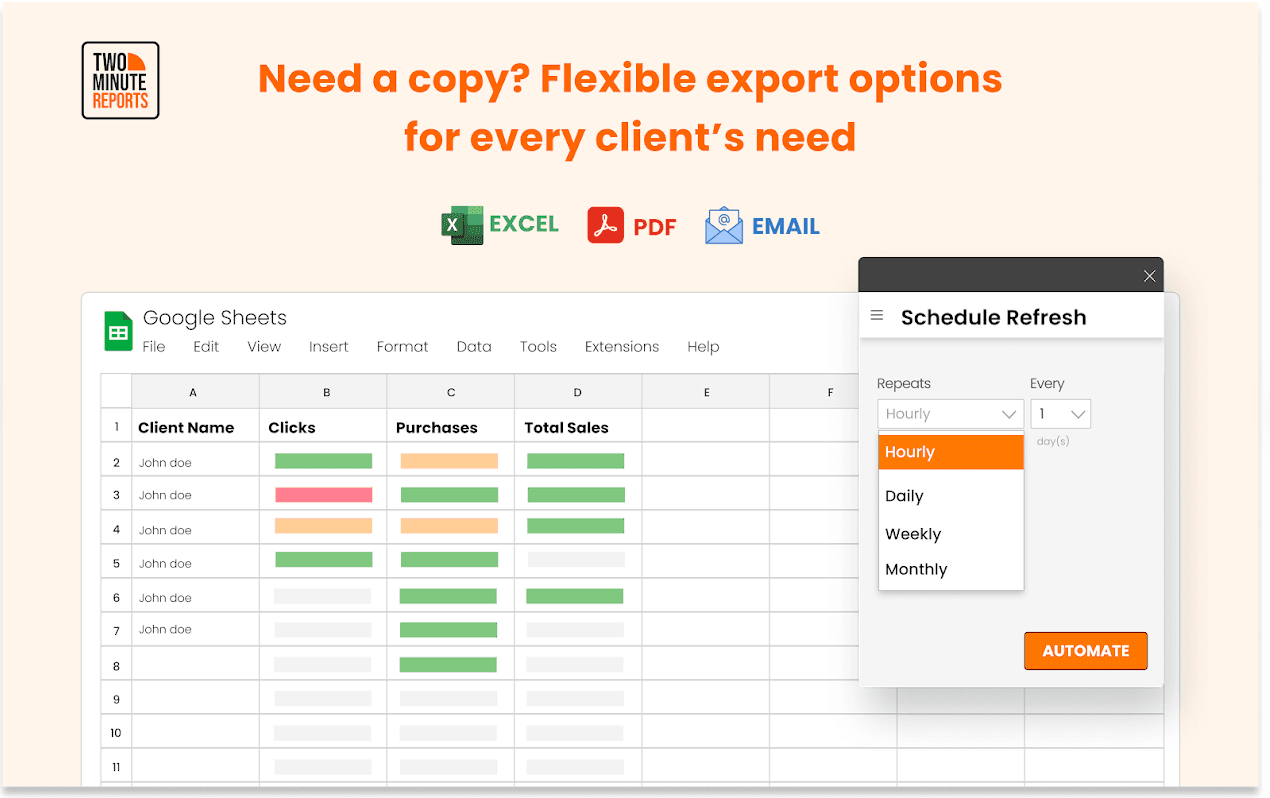
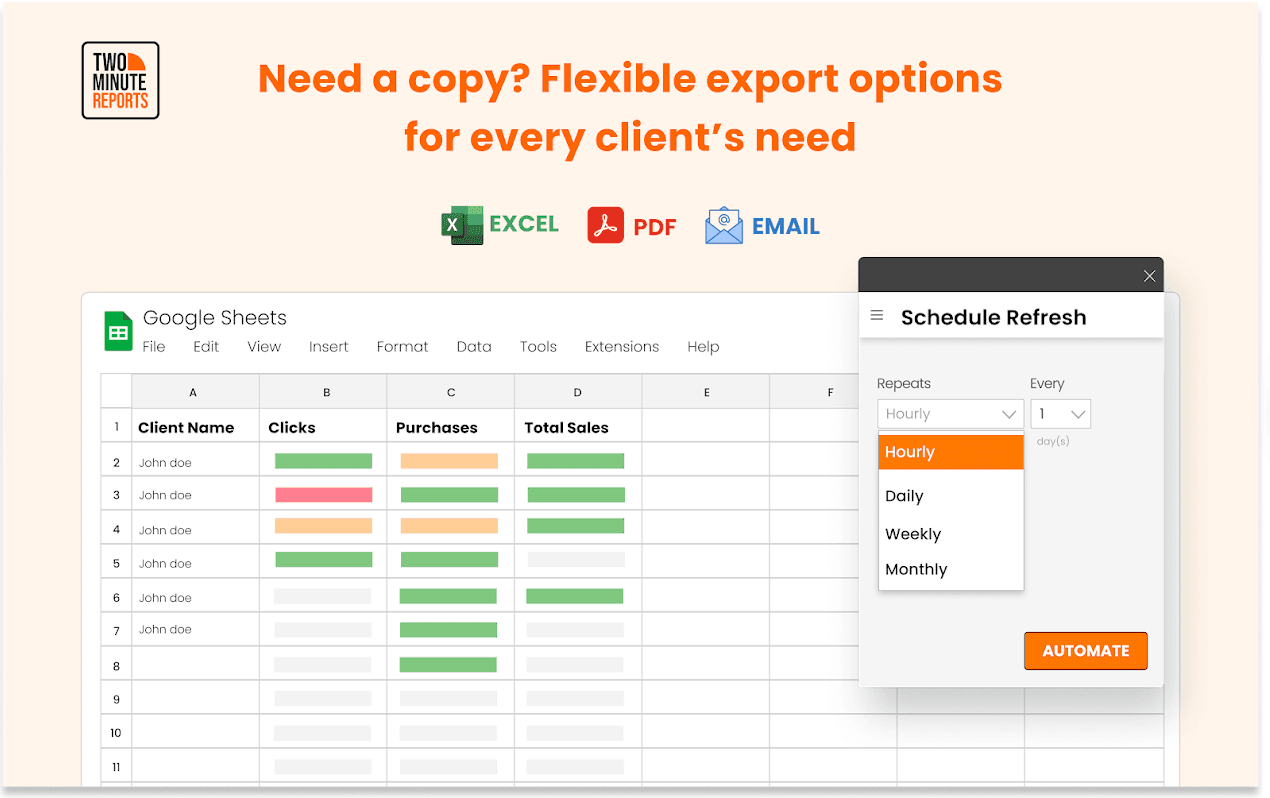
- Deliver up-to-date PPC performance insights (daily, weekly and monthly)
- Teams align faster on actions.
- ROI Trends become clearer than single, momentary spikes.
- When all platforms are reviewed in the same report, budget reallocations are based on evidence.
Key Takeaway: Two Minute Reports ensures your PPC performance is consistently visible, comparable, and actionable across platforms – so optimization decisions are made on time and with confidence.
How to Select the Right PPC Platform For Your Business?
Apply the following factors to target the right platform and act with confidence.
- Start with intent, not reach: If users are actively searching or ready to buy, prioritize search or retail media. If demand needs to be created first, consider social or video ad platforms.
- Match the platform to your funnel stage: Top-of-funnel platforms influence consideration; bottom-of-funnel platforms close conversions. Expecting one platform to do both usually leads to poor ROI.
- Be realistic about budget and competition: Some platforms require higher CPC tolerance or creative investment to perform. If the budget is limited, start where efficiency is more predictable.
- Assess your ability to create and refresh creatives: Platforms like social and video reward frequent creative iteration. If your team can’t support that cadence, performance will stall.
- Choose PPC platforms you can measure properly: If you can’t track conversions or assisted impact reliably, optimization becomes guesswork.
- Test with a defined outcome: Launch usecases with clear success criteria – cost thresholds, volume targets, or assisted contribution before committing budget.
Final Thoughts
PPC success depends more on choosing the right paid advertising platforms for your audience, funnel stage, and performance measurement. Each platform plays a distinct role, and clarity on that role is what prevents wasted spend. The table below summarizes how the major paid advertising platforms differ, so you can evaluate fit before making a final decision.
Choose the right PPC platform, align campaign goals, track the right KPIs, and review performance in real-time using Two Minute Reports. Try it free for 14 days and create your first PPC report within minutes.
Frequently Asked Questions
A PPC platform enables you to organize and execute paid advertising campaigns. It provides essential tools for researching keywords, managing bids and budgets, designing ads, and tracking performance, which makes it easier to grow your business.
The main types of PPC platforms include Search Advertising, Social Media Advertising, Display & Native Advertising, Retail Media Networks, Video & CTV Advertising, and Programmatic PPC Platforms.
You can track and optimize ROI by using a PPC reporting software such as Two Minute Reports. It helps you centralize key metrics, monitor performance trends, and automate PPC reporting across multiple clients for continuous optimization.
Start by understanding the intent behind your audience's searches and the specific stage of their journey. Evaluate your budget, the ability to create new ads, and how you'll track success. It's a good idea to run a few tests with clear goals to find out which platform works best for you.
Related Blogs





Meet the Author
Shalini MuruganShalini is driven by ideas that create a tangible impact. At Two Minute Reports, she specializes in content that helps marketers optimize their reporting workflows. When she's not transforming complex data into meaningful insights, you might find her lost in a book, jotting down ideas in her notebook, or connecting the dots others overlook.