
Summarize this blog post with:
SEO and PPC solve different problems. SEO builds lasting visibility in search over time, while PPC drives immediate traffic through paid ads. Knowing which one to use and when to combine can be the difference between wasted budget and sustainable growth.
In this guide, we’ll explore:
- SEO vs PPC: What’s the difference
- When to use SEO vs PPC
- The Basics of SEO and PPC
- Calculating the ROI of SEO and PPC
- Should SEO and PPC work together?
- Creating an integrated marketing strategy
SEO vs PPC: What’s the difference?
SEO lets you improve visibility in search engines such as Google, Bing, etc. PPC buys visibility through paid placements that appear the moment your campaign goes live. That said, here are the key differences:
When to use SEO vs PPC?
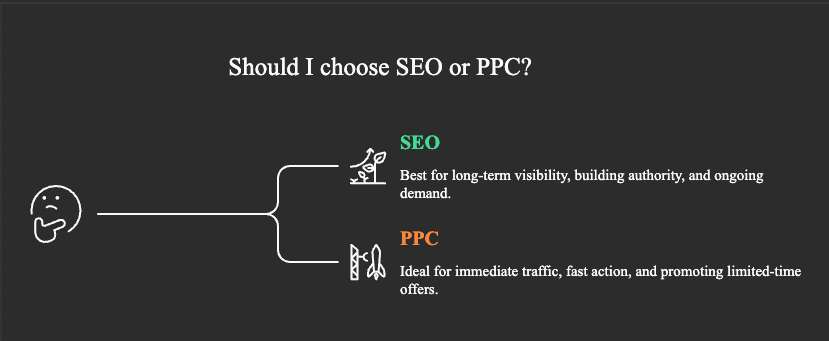
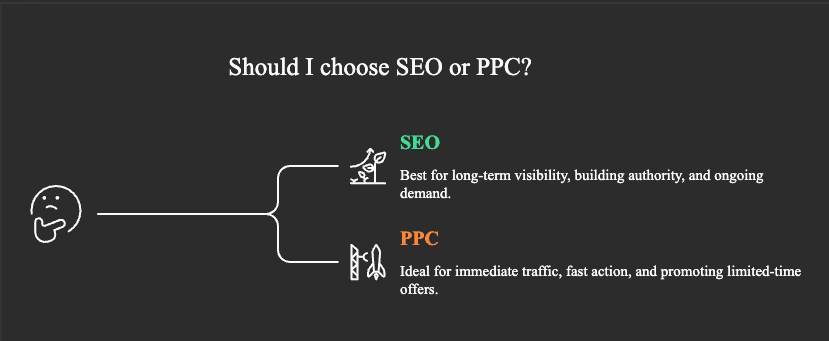
Use SEO when you are building long-term visibility and can invest consistently over time. Use PPC when you need immediate traffic, have a specific campaign window, or are testing a new market before committing to growth.
That said, budget and bandwidth are real constraints. The checklist below helps you cut through the overlap and prioritize the right channel for where your business is right now.
The checklist closely reflects how marketers approach this decision in practice. The discussions in Reddit showcase a consistent pattern: PPC is typically used when speed and immediate feedback matter, while SEO is prioritized for long-term, sustainable growth.
As one marketer put it:
“If your product/service is something people search for actively and you can see enough number of searches from your target GEO, SEO could be helpful. If your product/service is something that needs to be educated/pushed to your target audience, PPC would work better.”
There’s also a strong agreement on a common mistake:
“The mistake is splitting too early and doing both poorly.”
In reality, high-performing teams don’t treat SEO and PPC as competing choices. They sequence them based on what their business needs at that moment.
What is SEO?
SEO is the process of improving your website’s visibility in organic search results so the right audience finds you. It works by aligning your content and authority signals with what search engines reward and what users are actually searching for.
- Keyword research: finding and targeting keywords that people use to search your website.
- On-page SEO: creating high-quality content to align with your audience’s intent.
- Off-page SEO: focusing on building backlinks and authority by collaborating with third-party providers.
- Technical SEO: focusing on fixing website improvements such as speed, usability, and user experience.
Tip: Try our free Sitemap Checker to visualize your site’s SEO health instantly.
How much does SEO cost?
SEO pricing typically ranges from $250 to $10,000 per month, depending on the provider, scope of services and market competitiveness. Most businesses, around 63%, spend less than $5000 monthly on SEO. Larger budgets are usually tied to more aggressive strategies aimed at improving search rankings, authority and overall visibility.
Recommended Reading: How to create an SEO keyword ranking report in Google Data Studio: A Step-by-Step Guide
What is PPC?
PPC (pay-per-click) is an advertising model where you pay when someone clicks on your ad, driving targeted traffic to your product or service. You can:
- Perform keyword bidding: Set the maximum amount you’re willing to pay to capture the highest rank.
- Refine audience targeting: Deliver the right offer at the right time to the relevant audience.
- Analyze campaign performance: Use a dedicated PPC reporting software to compare and evaluate campaigns across multiple clients and platforms.
- Measure and optimize ROI: Regularly test and iterate on what’s working to optimize conversions and revenue.
Tip: Running PPC campaigns? Try our free keyword match type tool to generate ready-to-use keywords based on your selected match type.
How much does PPC cost?
PPC pricing depends on several factors, such as industry, platform, quality score, targeting, budget, etc. Research suggests that the average Cost Per Click falls between $0.11 and $0.50 per click, while the average Cost Per 1000 impressions ranges from $0.51 to $1.00.
If you work with an agency, pricing can also be purely performance-based; you pay an agreed fee only when a specific goal is met, say 1000 leads generated or 100 signups secured.
Recommended Reading: PPC Audit Guide: Improve Campaigns in Minutes
SEO vs PPC: Pros and Cons
Let's have a look at the pros and cons of SEO and PPC:
Pros of SEO:
- Traffic can sustain without continuous spending.
- Lower marginal costs at scale.
- Captures demand beyond the bottom-funnel.
- Compounds over time via authentic content and authority.
Cons of SEO:
- Takes time to produce meaningful results.
- You can influence rankings but not control them.
- Rankings do not guarantee clicks anymore.
- Difficult to measure attribution in the long term.
Pros of PPC:
- PPC is the faster route when you need traffic, leads or sales rather than months from now.
- You can choose audience, location, timing, device, budget, landing page and message with far more precision than SEO allows.
- Reveals cleaner attribution path connecting ad spend, clicks and conversions.
- Strong for bottom of funnel intent.
Cons of PPC:
- Once the spend drops, visibility usually drops quickly.
- Can soon become expensive due to higher competition, rising CPCs, weaker creatives or poor landing pages.
- Requires continuous optimization.
- Performance can decline when audiences repeatedly see the same messaging or creatives.
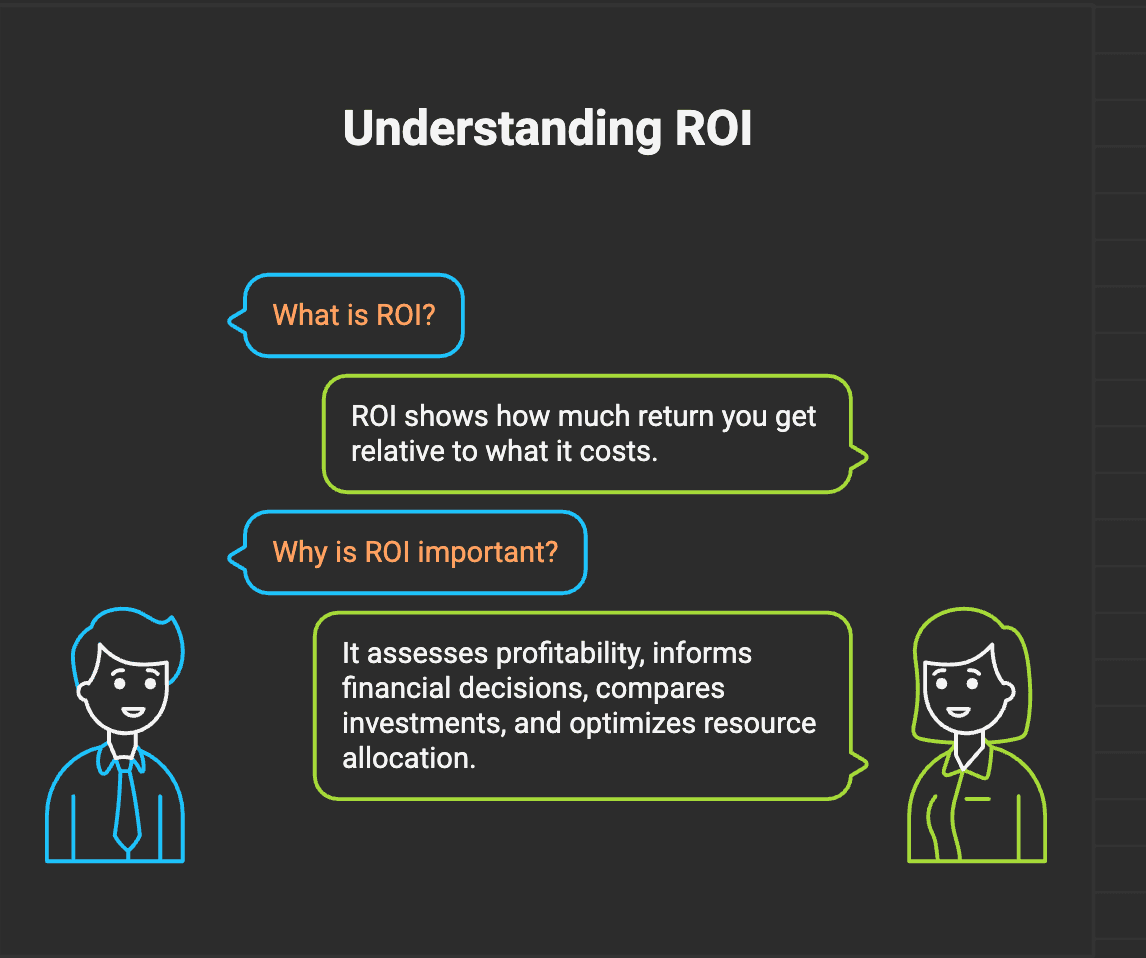
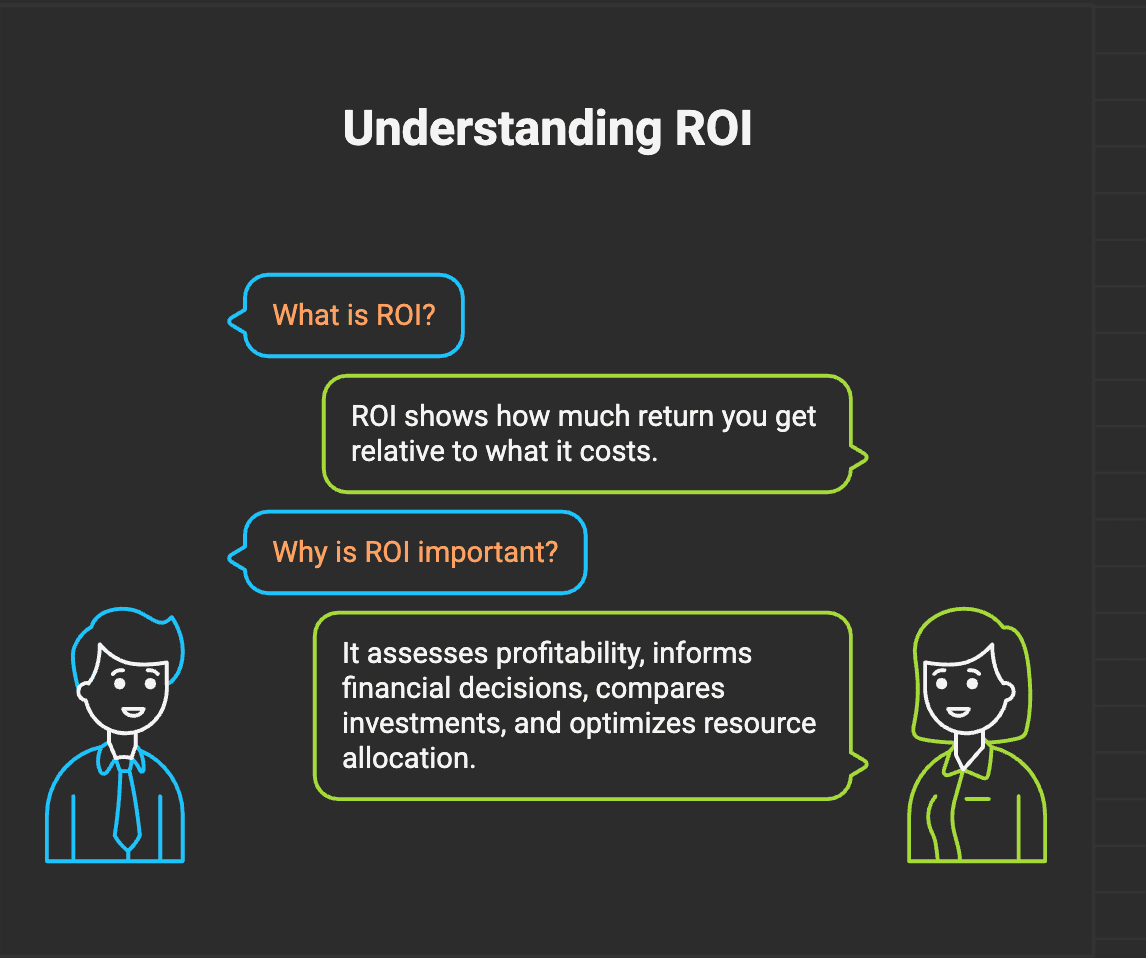
How to calculate the ROI of SEO and PPC?
The formula is the same for both channels. What separates them is everything underneath it.
ROI = ((Revenue Generated – Total Cost) / Total Cost) x 100
You have to carefully decide what counts as revenue and what belongs in the cost column. If you get those inputs wrong, your ROI number becomes a story you tell yourself, not a signal you can act on.
How to calculate SEO ROI?
Start with revenue generated from organic search. That means sales closed, leads captured, demos booked, or pipeline value attributed to organic visits, not just traffic.
Then account for the full cost of SEO. This is where many calculations fall apart. SEO cost is not just the agency retainer. It includes:
- Content production and updates
- Technical SEO work and development time
- SEO tools and platforms
- Agency or freelancer fees
- Internal team hours
SEO ROI = ((Revenue from SEO – SEO Cost) / SEO Cost) x 100
Example: If SEO generated $12,000 in revenue for a quarter against a total investment of $4000:
(($12000 – $4000) / $4000) x 100 = 200% ROI
However, the harder problem with SEO is attribution. Organic search often influences a buyer early in the journey, long before they convert. To measure it accurately, look at organic conversions, assisted conversions, and revenue from organic landing pages together.
How to calculate PPC ROI?
PPC gives you cleaner inputs because spend and conversions are directly visible inside the platform. Full PPC cost should include:
- Ad spend
- Creative and copy production
- Landing page design and development
- Agency or campaign management fees
- Tracking tools and software
PPC ROI = ((Revenue from PPC – PPC Cost) / PPC Cost) x 100
If a paid campaign generated $2000 in revenue against $500 in total spend:
(($2000 – $500) / $500) x 100 = 300% ROI
The Real Difference Between SEO ROI and PPC ROI
SEO ROI is slow to prove and hard to lose. A well-optimized page can generate revenue for months or years after the initial investment. The cost curve flattens over time while the returns compound. That is why SEO ROI tends to look stronger the longer you measure it.
PPC ROI is fast to prove and easy to lose. You can measure a paid campaign’s return within days. But the moment you stop spending, the traffic stops, and the visibility reduces gradually.
Note: Do not conflate ROI with ROAS.
ROAS tells you how much revenue came back for every dollar placed in the auction. ROI asks the harder question: after every dollar spent across the entire channel, not just ad spend, but production, management, tools and time, did this actually make the business money?
A campaign can show an impressive ROAS and still generate a negative ROI once the full cost picture is included. Measure what the business actually cares about.
How to use PPC and SEO together?
SEO and PPC produce better results together than either does alone. The strategic advantage comes not from running both simultaneously, but from using each channel’s data and strengths to actively improve the performance of the other. Here’s how:
1. Use PPC to Cover Gaps While SEO Catches Up
There will always be keywords that matter before you rank for them organically.
That is where PPC does its job best. If a term has strong intent and matters commercially, there is no reason to stay invisible while waiting for SEO gains.
Map your targeted keywords, identify where you already ranked well and use PPC to cover the rest. This keeps you present for high-intent searches and gives you useful conversion data while your organic visibility improves.
2. Test Paid and Organic Visibility Together on High-Value Terms
For important searches, owning more of the results page can increase total click share.
If you already rank organically for a high-value keyword, it can still be worth testing PPC on the same term. But the goal is not to measure paid clicks in isolation. The real question is whether the total traffic, leads, or revenue increases when both listings appear together.
Sometimes this works well, especially in competitive categories when more SERP visibility builds trust and pushes competitors down. Sometimes it simply shifts clicks you may have earned anyway. That is why this should be tested as an incremental lift question, not treated as a universal rule.
3. Use Strong SEO Pages as PPC Landing Pages
You do not always need a separate landing page for every ad group.
In many cases, your best-performing organic pages already have what paid traffic needs: strong intent alignment, better structure, useful depth, and more trust signals than a rushed PPC page.
Before building new landing pages, test the SEO pages that already rank, engage visitors well, and match commercial intent. If they convert efficiently, you save time and avoid unnecessary production work. If they do not, you have a clear case for building something more targeted.
The key is intent match. A high-traffic SEO page is only a good PPC landing page if it supports the action you want the visitor to take.
4. Use PPC Retargeting to Recover SEO Traffic
Most organic visitors do not convert on the first session. That does not mean the traffic failed. It usually means the buying journey is not finished yet.
If someone lands on your pricing page, service page, or high-intent commercial content through organic search, they have already shown interest. Retargeting those users through PPC is one of the most practical ways to improve conversion efficiency across channels.
Segment organic visitors based on the pages they viewed and build retargeting around the intent. Someone who visited a pricing page should not see the same message as someone who read an educational blog post.
Create an Integrated Marketing Strategy That Works Both Ways
The brands winning in search are not choosing between SEO and PPC. They are using each one to make the other stronger.
SEO lays the foundation for building authority and trust, and for compounding visibility over time. PPC fills the gaps, tests what works, and drives results while that foundation is still being laid. Together, they cover the full buyer journey, from first search to final conversion.
The next step is building a system in which both channels inform each other and every decision is backed by data you can actually act on.
That is where Two Minute Reports comes in. Connect your SEO and PPC platforms in Google Sheets or Google Data Studio and get a clear picture of what is driving results, what is draining budget, and where your next move should be.
You’ll be able to:
- Track, analyze and optimize SEO analytics for multiple accounts in a single workspace.
- Measure the total revenue across both channels to make informed decisions.
- Spot what is working organically and amplify it with PPC marketing.
- Identify budget leaks in your PPC campaigns before they compound.
- Build and share automated reports with actionable next steps to your clients or stakeholders in minutes.
Frequently Asked Questions
The core difference is that SEO builds lasting visibility in search over time through organic results, while PPC drives immediate traffic through paid ads. SEO is better for long-term growth, whereas PPC is ideal for quick results.
PPC is a pay-per-click advertising model that allows you to drive paid traffic to your product or service when someone clicks your ad. It involves keyword bidding, audience targeting, and analyzing campaign performance.
To calculate SEO ROI, use the formula: ROI = ((Revenue from Organic Traffic – SEO Cost) / SEO Cost) x 100. Be sure to include all costs associated with SEO, not just agency fees.
Yes, combining SEO and PPC strategies is quite effective. PPC can provide immediate results while your SEO develops, and running tests on high-value keywords with both can maximize your reach and improve conversions.
Related Blogs




Meet the Author
Shalini MuruganShalini is driven by ideas that create a tangible impact. At Two Minute Reports, she specializes in content that helps marketers optimize their reporting workflows. When she's not transforming complex data into meaningful insights, you might find her lost in a book, jotting down ideas in her notebook, or connecting the dots others overlook.