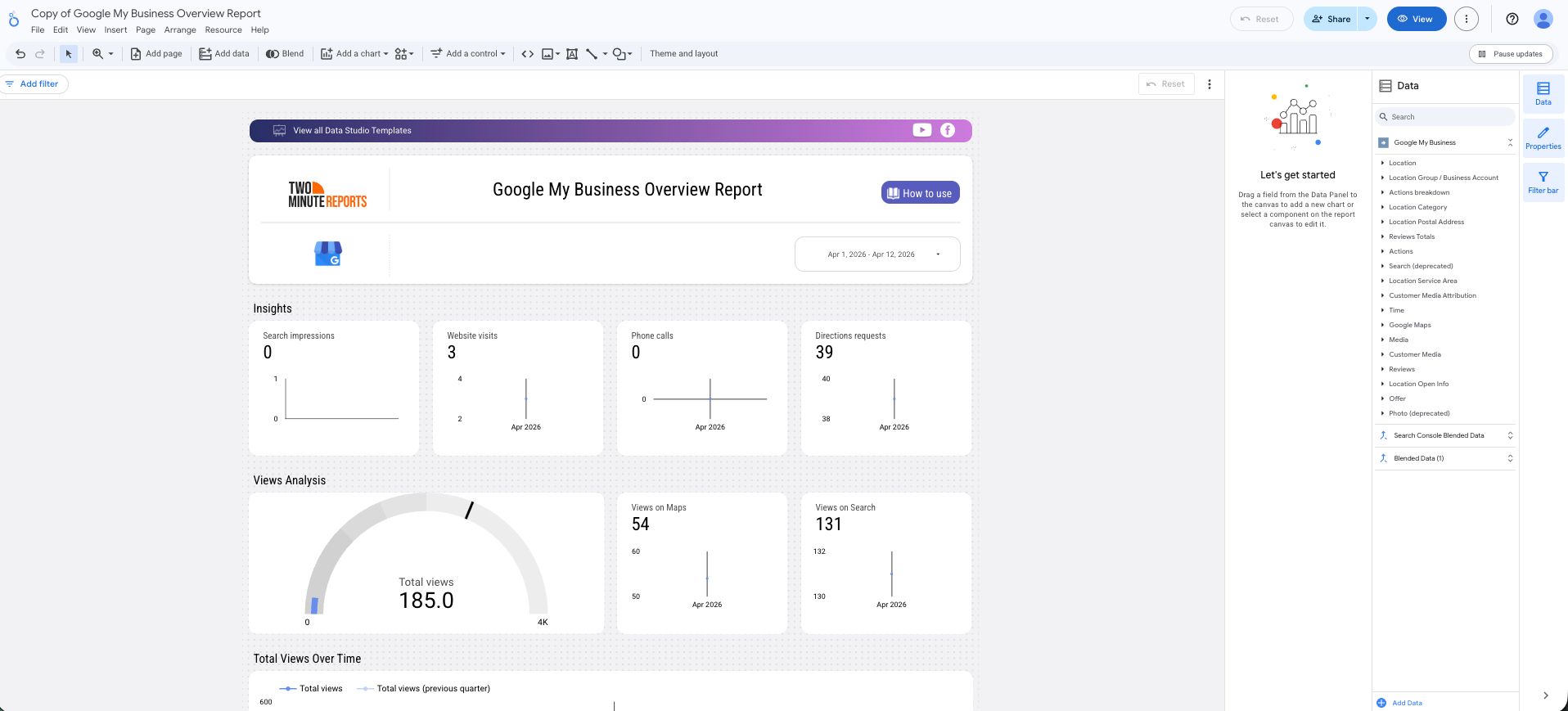
Connectors
Google My Business
Connect Google My Business to Google Sheets or Google Data Studio

Two Minute Reports' Google My Business connector lets you access and analyze your data directly in Google Sheets or Google Data Studio. Build custom reports, monitor key metrics, and make data-driven decisions - all without writing any code.
What you can report on
- Profile views, searches, and discovery impressions
- Direction requests, website clicks, and phone calls
- Customer reviews and average star rating trends
- Photo views and upload counts
- Local search query performance
Prerequisites
- A Google Business Profile account
- Owner or Manager access on the location(s) you want to report on
How to create a connection
- Go to https://hub.twominutereports.com/connections
- Select New Connection
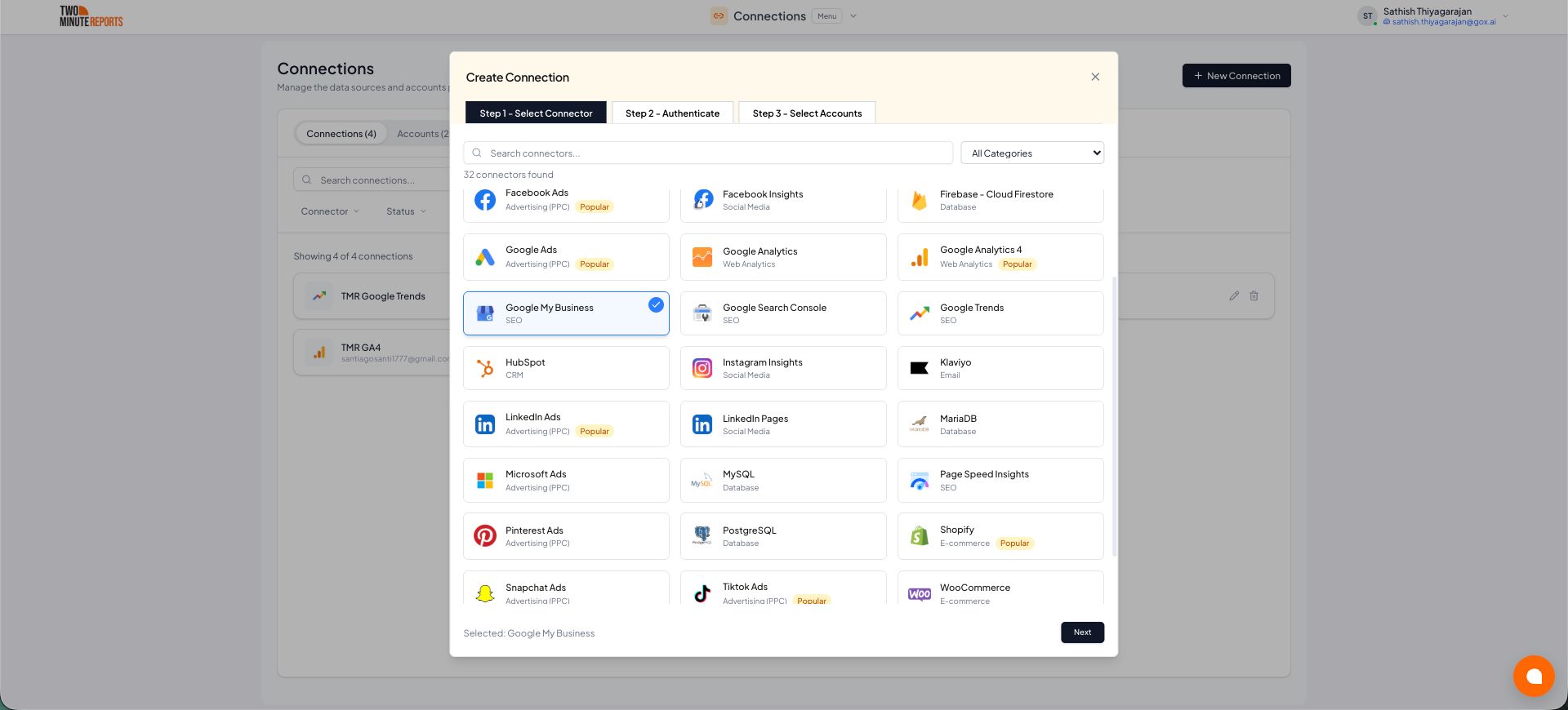
- Select Google My Business from the list of connectors
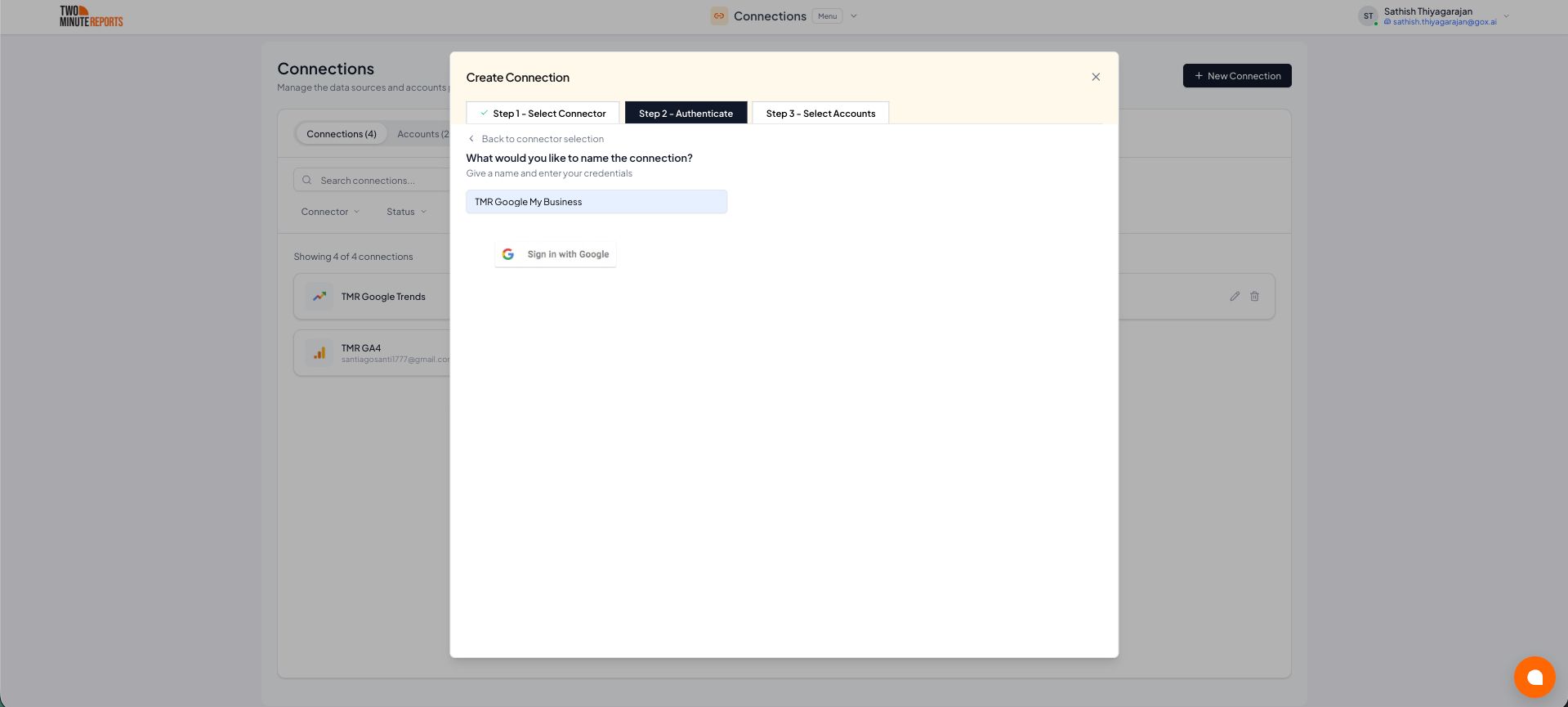
- Name the connection and authorize with your account credentials
- Enable the accounts you want to report on
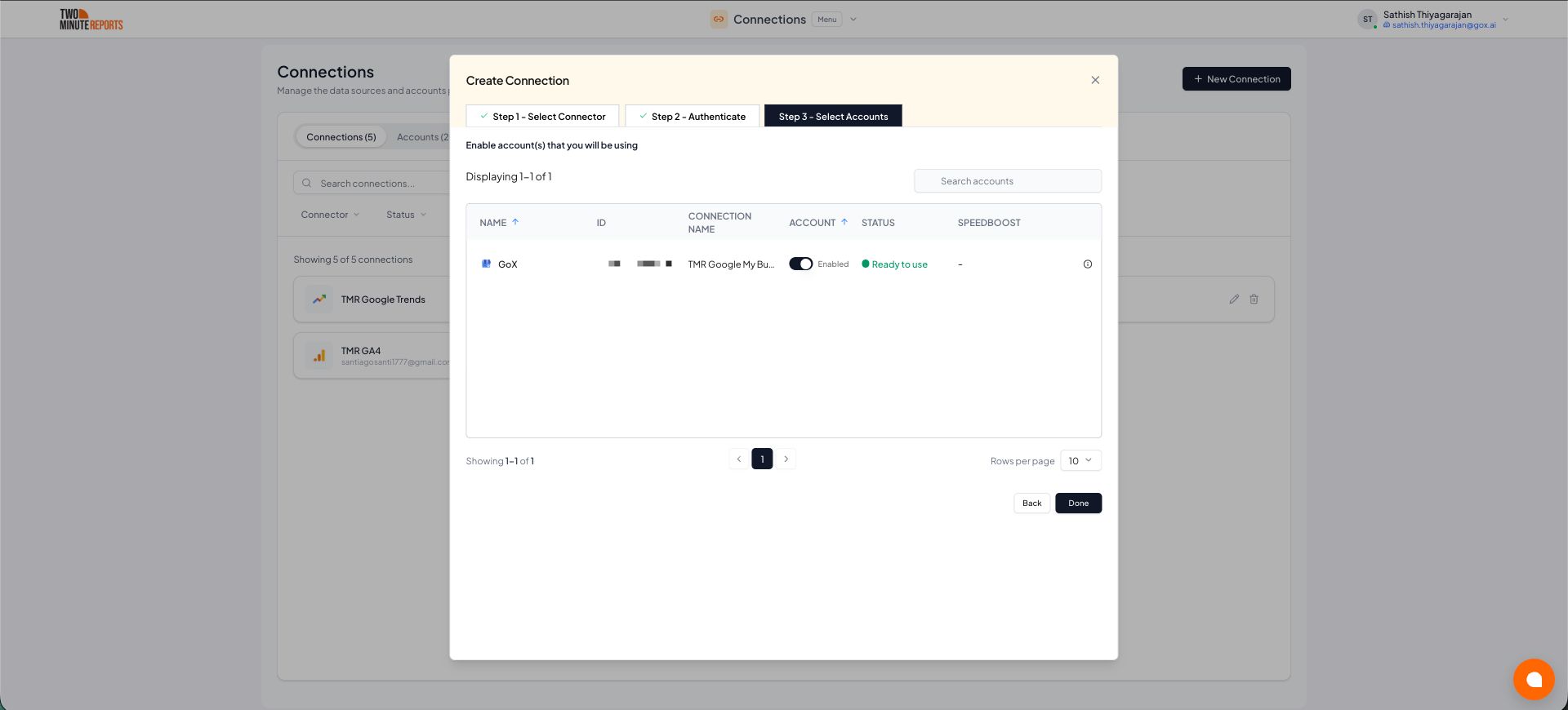
Only enabled accounts fetch data, and only enabled accounts count toward your plan. You can enable or disable accounts at any time on the Connections page.
How to get Google My Business data into your reports
To pull Google My Business data into Google Sheets:
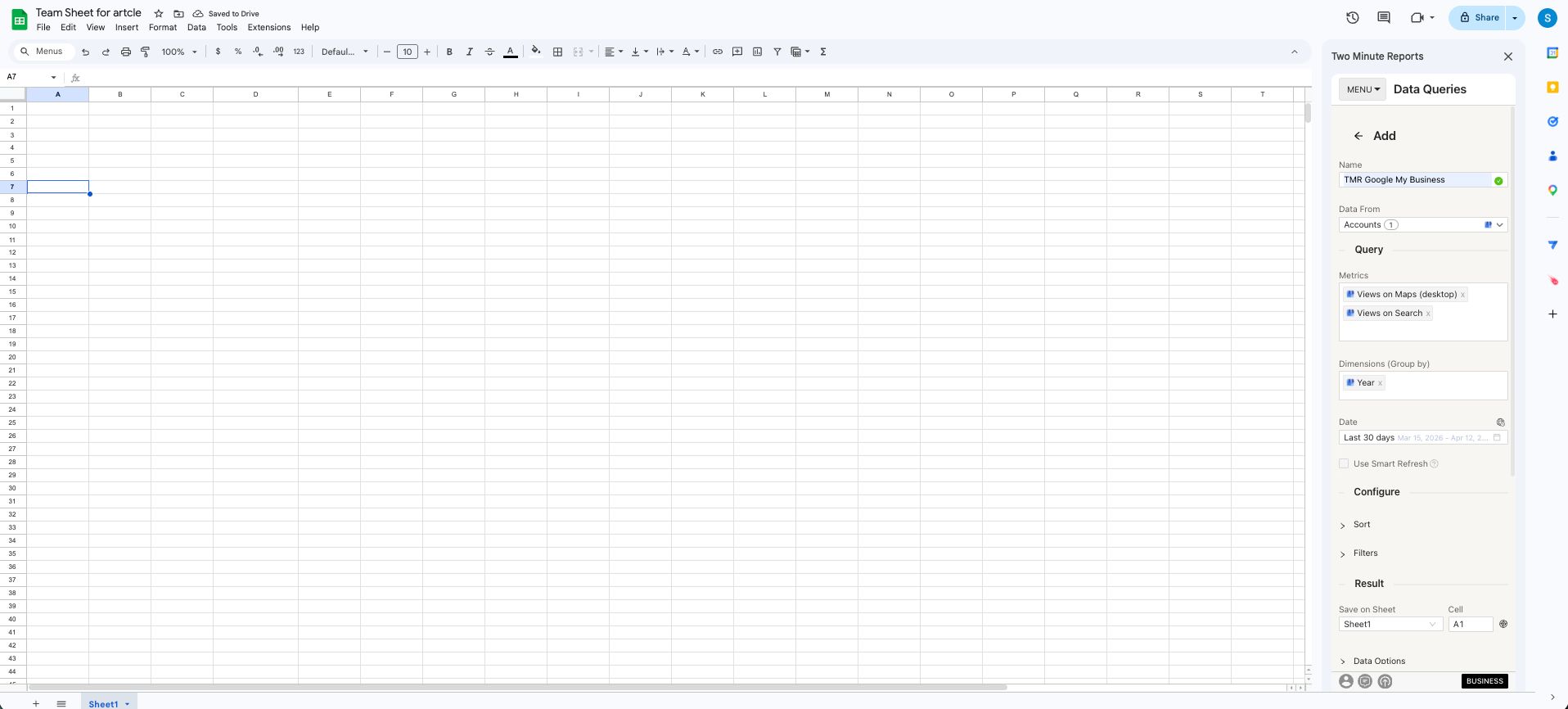
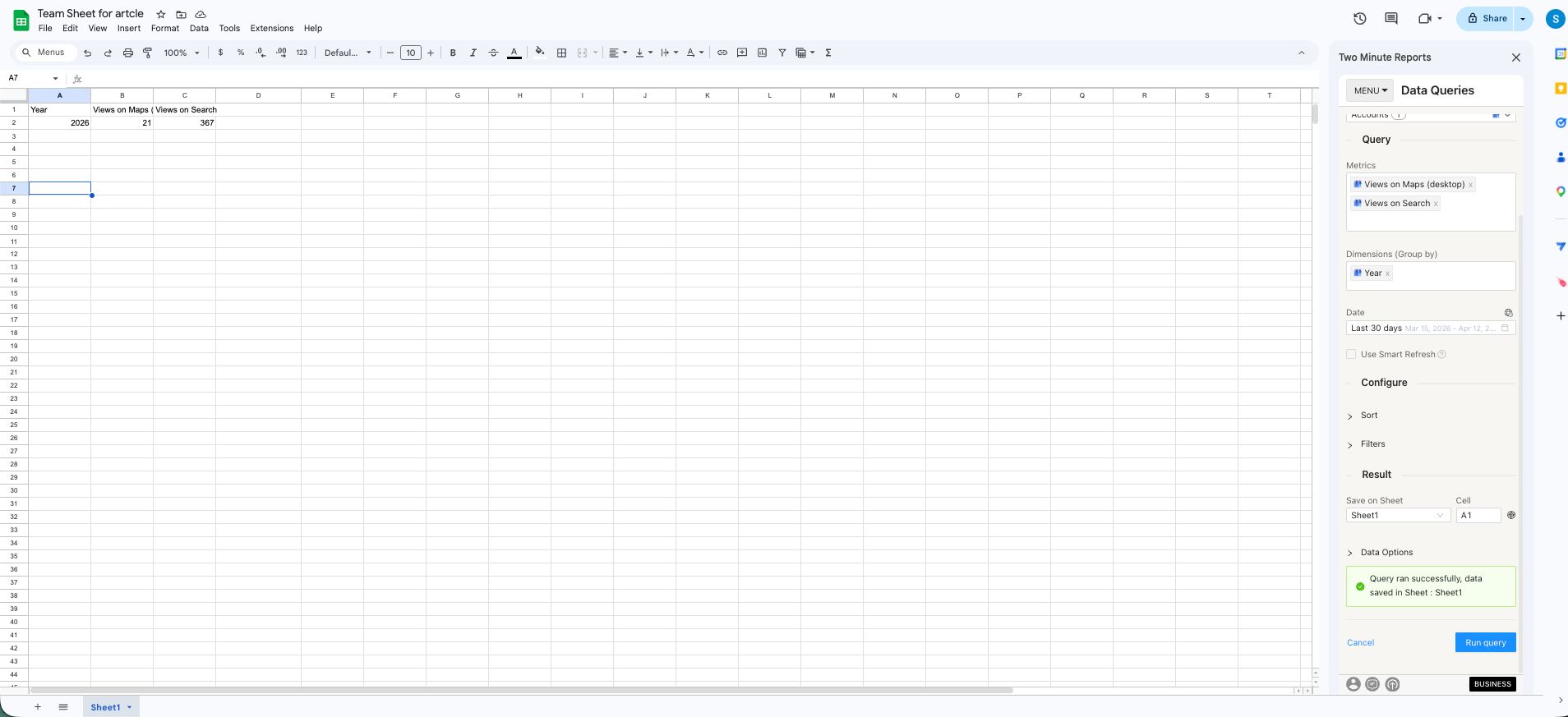
- In the TMR sidebar, go to Data Queries and select Add
- Select the accounts you want to analyze (can select multiple)
- Choose your metrics and dimensions from available options
- Select the date range for your analysis
- Configure sorting and filtering options as needed
- Select Run Query to populate the data into Google Sheets
To pull Google My Business data into Google Data Studio:
- Select Open in Google Data Studio, then select + Create Report.
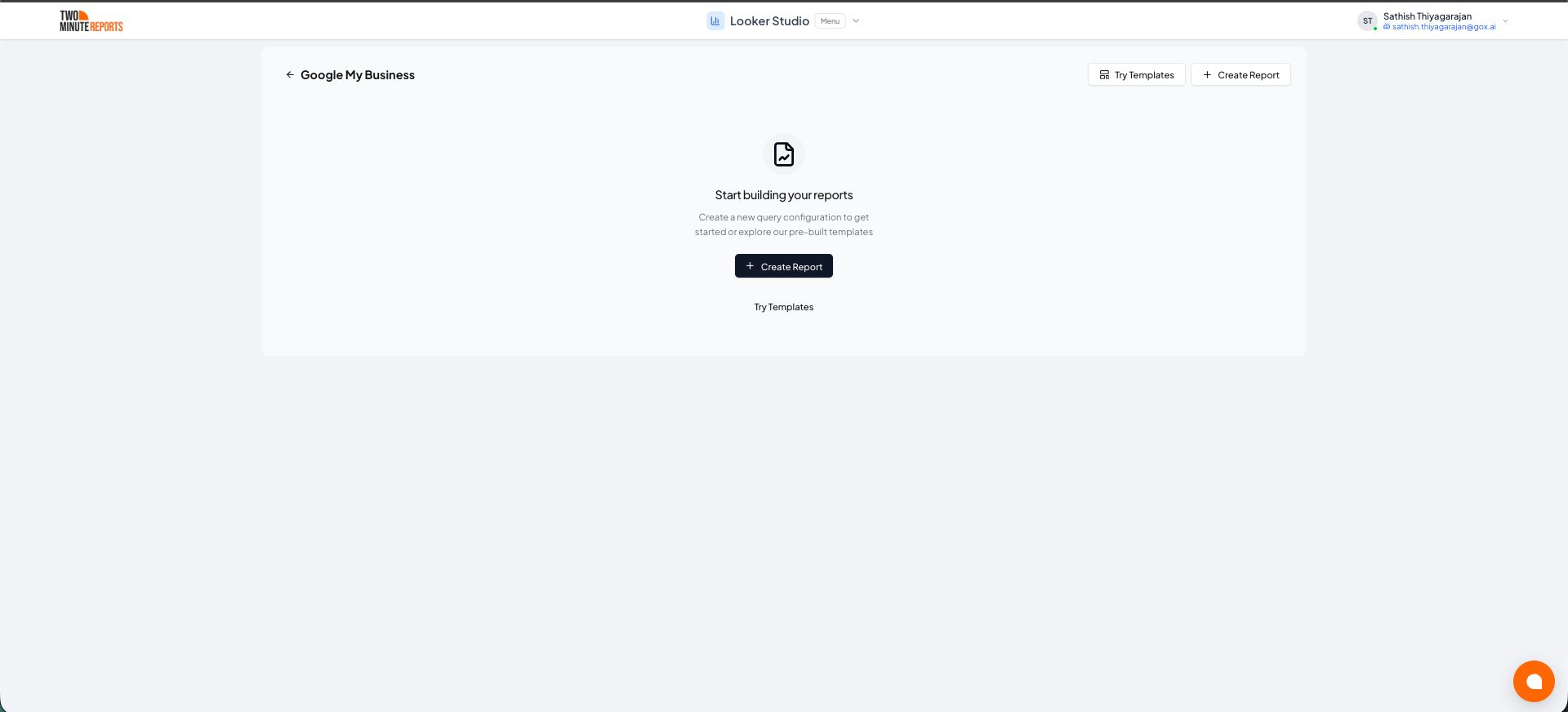
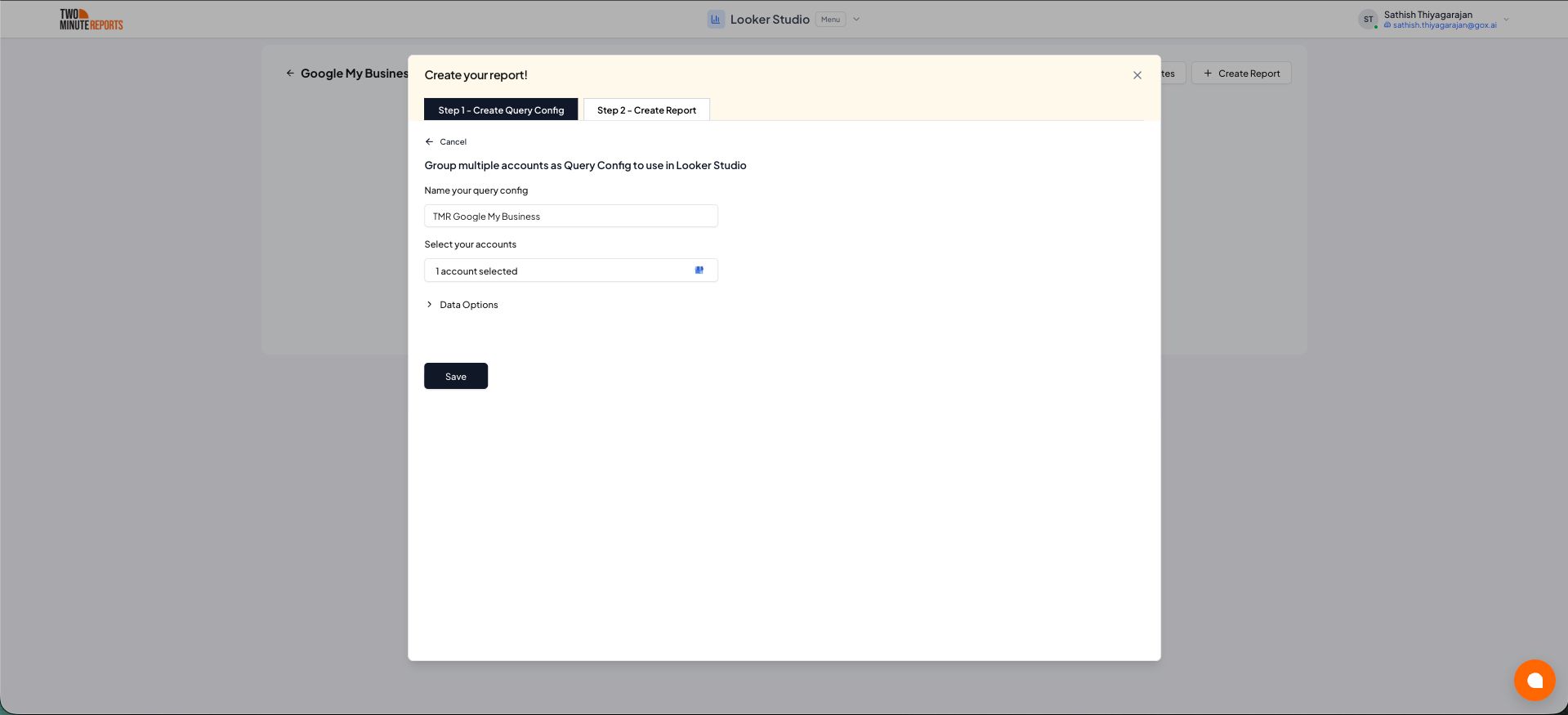
- A query config panel will appear. Do one of the following:
Already have a query config? Select it from the dropdown and skip to step 3.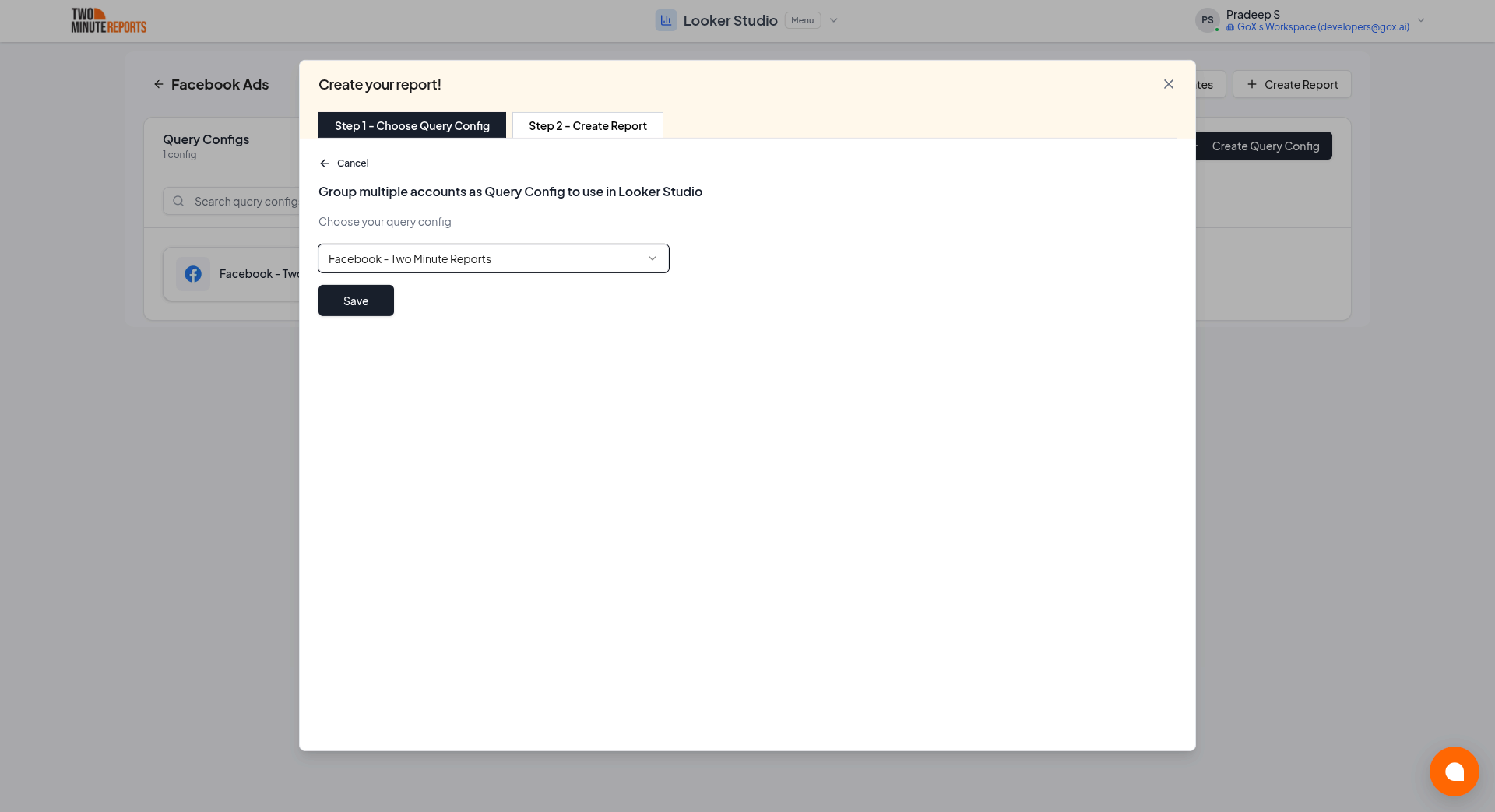
Creating a new query config: Enter a name, select the accounts you want to include from the dropdown, then select Save.
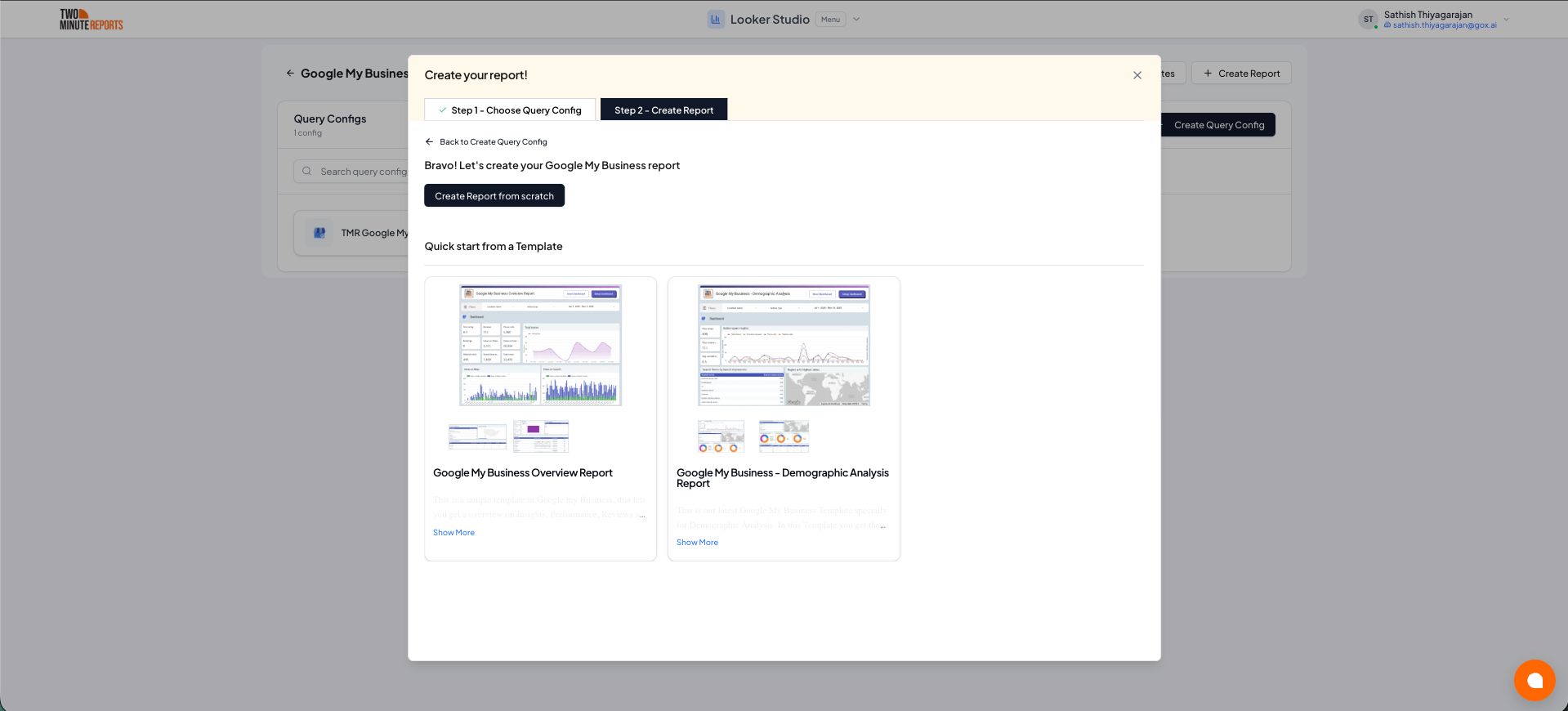
- Choose Create report from scratch to build a custom report, or select one of the pre-built templates to get started quickly.
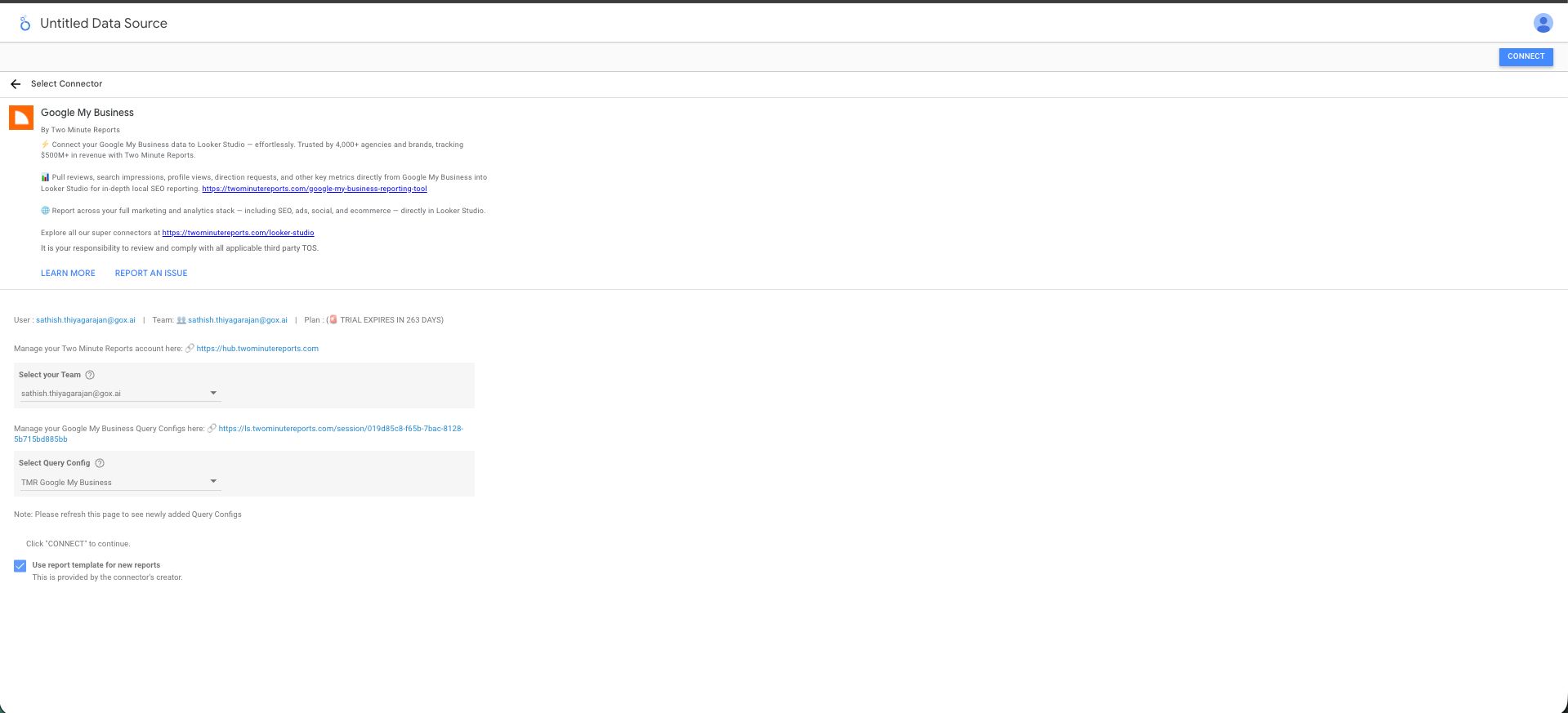
- In the Google Data Studio connector panel, select your team and choose the required query config from the dropdown. Select Connect in the top-right corner.
- You'll land on the Google Data Studio dashboard. Drag and drop the available Google My Business metrics and dimensions onto your canvas to start analyzing your data.